VIP Stay at Mandarin Grove Health and Wellness Retreat
FUE HAIR TRANSPLANT


OPERATION PACKAGE DETAILS
Why Revitalize In Turkey?
With 18 years of experience in the medical tourism field, we have built a reputation for excellence and trust. What sets us apart is our exceptional aftercare service, provided exclusively at our wellness retreat, Mandarin Grove. Unlike any other clinic, we offer a tranquil environment at Mandarin Grove, tailored to the needs of our patients. From comfortable accommodation to 24/7 care, we ensure your well-being and recovery.
We endeavour to offer exclusive operation packages where patients can enjoy the pure luxury of recuperating at Mandarin Grove with professional after-care and have the peace of mind of knowing that they get the best medical support.
FUE Hair Transplant in Turkey
Many people seek a hair transplant to address male and female pattern hair loss. They look for natural results, improved density and careful scar-minimising methods. In this article we concentrate on FUE as the preferred option for those goals and explain why it often suits both men and women.
Throughout the guide we will cover how to choose a clinic, travel preparation from the UK, step-by-step procedural details, aftercare, risks and long-term maintenance. We will not publish prices here; readers seeking a tailored quotation for a hair transplant in Turkey should contact us for personalised pricing and assessment.
Why choose Turkey for a hair transplant
We regularly advise patients from the UK to consider Turkey when researching hair restoration. High procedure volumes have created deep clinical experience, making the country a leading destination for those seeking value and skilled care. Many come for a fue hair transplant and find the combination of expertise and convenience attractive.
Reputation for specialised hair transplant services
Turkish clinics have built a global reputation for specialised hair transplant services. Surgeons and teams perform large numbers of cases, which refines technique and planning. Patients often mention consistently natural outcomes when comparing options for a hair transplant turkey.
Clinic standards and international accreditation
We encourage verification of clinic accreditation and surgeon credentials before booking. Numerous clinics work to international standards and pursue ISO or Joint Commission-style practices. Use of CE-marked equipment and recognised sterilisation protocols is common in reputable centres offering the best hair transplant procedures.
Understanding FUE Hair Transplant
We outline what to expect when considering a FUE Hair Transplant and how it compares with other approaches. This short guide clarifies the technique, the usual steps during treatment, and who tends to benefit most from a hair transplant procedure.
What FUE entails and how it differs from other methods
FUE is a minimally invasive technique in which individual follicular units are removed from the donor area, usually the back and sides of the scalp. The method avoids the linear donor scar typical of FUT, leaving small dot scars that are easier to conceal with short hairstyles.
We find that patients report less post-operative discomfort with FUE than with strip methods. Variations such as micro-FUE and robotic-assisted FUE use smaller punches or mechanised extraction to improve precision and graft survival.
Typical steps in an FUE procedure
First, we perform a pre-operative assessment and map the hairline to match facial features and density needs. The donor area is trimmed and local anaesthesia is applied to ensure comfort.
Next, individual grafts are extracted using a punch device and placed in a preservation solution. Recipient sites are created with careful attention to angle and direction. Grafts are implanted following the hairline plan, then a light dressing is applied before discharge.
Who is a suitable candidate for FUE
Suitable candidates are adults with stable donor hair and realistic expectations. We consider donor density, hair-loss pattern, scalp laxity and medical history when assessing suitability.
People with uncontrolled medical conditions, bleeding disorders or diffuse unpatterned alopecia may need further evaluation or alternative treatments. Commitment to aftercare and follow-up plays a key role in achieving the best outcome from a fue hair transplant.
Benefits of FUE compared with other techniques
We outline key advantages of the FUE hair transplant so readers can weigh options when choosing care. This method often suits people who want discreet healing, precise placement and fewer lifestyle interruptions after treatment at a reputable hair transplant clinic.
Minimal scarring and natural-looking results
FUE produces tiny, circular donor-site marks rather than a long linear scar. Those marks sit low in visibility and are easy to conceal with short hair. Surgeons can angle grafts to match natural growth, giving dense, realistic coverage that many regard as the best hair transplant outcome for aesthetic needs.
Recovery time and return to normal activities
Recovery after a fue hair transplant is typically faster than strip excision. Patients commonly return to light activities within a few days and non-contact work within a week, subject to clinic guidance. Short-term effects such as swelling, redness and crusting ease quickly when we follow after hair transplant instructions closely.
Long-term outcomes and graft survival
Grafts taken from genetically resistant donor areas generally remain permanent. Long-term success depends on surgical technique, graft handling and recipient-site care. When clinics follow best practice, graft survival rates are high and many patients enjoy lasting coverage without repeated corrective procedures.
We recommend discussing expectations with a qualified team at your chosen hair transplant clinic so you can plan realistic timelines and post-operative care tailored to your needs.
Choosing the best hair transplant clinic in Turkey
We need a clear set of checks before we commit to a provider abroad. Finding the right hair transplant clinic affects outcomes, comfort and follow-up. The points below help us compare options for a hair transplant turkey visit and for any uk hair transplant referrals we may consider.
Key factors to evaluate in a clinic
Look for national or international accreditation and verified surgical licences. Ask to see a broad portfolio of clinical photos showing real patients and consistent results. Confirm staff qualifications, surgeon experience and whether the surgeon leads the procedure from extraction to placement.
Inspect equipment lists and infection-control protocols. On-site laboratory facilities, clear patient pathways and a dedicated patient coordinator improve safety and organisation. Check whether the clinic offers structured post-op support and a documented follow-up plan.
Questions to ask during your consultation
We recommend asking about the extraction method — manual, motorised or robotic — and the expected graft numbers for your case. Request details on anaesthesia, pain control and how grafts are stored and handled during the procedure.
Confirm surgeon involvement at each stage and the scheduled post-op visits. Ask what the package includes: transfers, accommodation, medications and emergency contact details. Request a written consent form and a clear timeline for expected growth and follow-up care.
Red flags to avoid when selecting a clinic
Avoid clinics that promise unrealistic results or quote very short procedure times for large graft counts. Be wary if staff refuse to provide full photographic records, references or independent reviews.
Poor hygiene, unclear aftercare commitments or pressure to book immediately are strong warning signs. Use third-party review platforms, national regulators and patient forums to verify claims. For British patients we suggest confirming prior experience with UK clients and asking for references from recent British patients planning a uk hair transplant.
Preparing for your hair transplant trip from the UK
We plan every trip so you arrive fit for surgery and ready to recover. A short pre-travel check with your GP can help us confirm fitness, review medications such as anticoagulants or NSAIDs, and flag any chronic conditions. Send your medical history and any recent blood test results to the hair transplant clinic before travel. Check vaccinations and entry rules for Turkey well in advance.
Carry key documents in both digital and paper form. Keep your passport, clinic appointment confirmations, signed consent forms and pre-op instructions to hand. Save contact numbers for the clinic and our UK support team. If the clinic requested additional records, bring those copies to avoid delays.
Pack clothes that protect your grafts and make dressing easy. Choose loose-fitting shirts that fasten at the front to avoid pulling over the head. Include a hat endorsed by the clinic for your journey home, prescribed medications, saline spray if provided and a travel pillow to keep your head elevated during transit.
Bring practical items for recovery. Comfortable footwear speeds movement around airports and hotels. Carry printed aftercare instructions and a camera or your phone to document healing if the clinic suggests it. Small toiletries and blister plasters help with comfort after long travel.
Arrange travel insurance that covers medical procedures abroad and the recovery period. Not all policies include elective surgery, so check exclusions and excesses carefully. Confirm transfers, local accommodation and whether the clinic offers a helpline for post-procedure questions or complications.
Plan for follow-up care once you return to the UK. Ask the clinic about routine checks and what to do if you need urgent advice. Comparing hair transplant cost estimates should include post-op support, as ongoing care affects value and outcomes for patients choosing a UK hair transplant or hair transplant turkey option.
We recommend contacting your chosen hair transplant clinic early to confirm paperwork, packing lists and insurance specifics so your trip is calm and well organised.
What to expect on the day of the procedure
We guide patients through a calm, structured day from arrival to discharge. The team at our hair transplant clinic aims to keep communication clear and tasks efficient so you feel informed at every stage. Below we outline the typical flow you will experience when having an FUE Hair Transplant.
Arrival, consultation and pre-operative checks
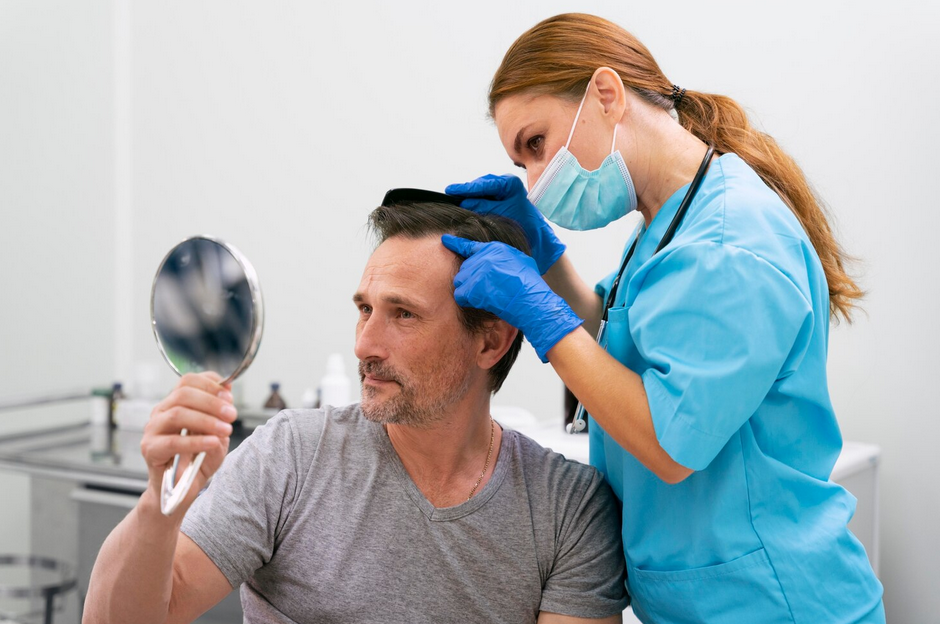
On arrival we confirm identity and review medical history. A clinician performs a final scalp assessment, takes standardised photographs and marks the planned hairline. Consent is re-checked and we record pre-op images to use as a baseline for follow-up.
How the procedure is performed step by step
We trim the donor area and apply local anaesthetic to ensure comfort. Extraction uses a fine punch device to harvest individual follicular units. Harvested grafts are placed in chilled preservation solution to maintain viability.
Recipient sites are created according to the marked hairline, with attention to natural angle and density. Implantation follows using forceps or implanters. Procedure duration varies with graft count and complexity, so we set expectations before we begin.
Immediate aftercare and discharge instructions
Once the procedure finishes we apply a protective dressing and brief you on immediate after hair transplant care. You receive written and verbal instructions covering sleeping position, washing routine and prescribed medications such as antibiotics and analgesics.
We advise on activity limits, sun avoidance and follow-up appointments. Patients are usually discharged the same day and transferred to accommodation. Emergency contact details and clear signs requiring urgent attention are provided before you leave the clinic.
After hair transplant care and recovery
We outline what to expect and how to protect your results after hair transplant treatment. Clear steps, realistic timelines and simple precautions help reduce anxiety and speed healing when you return home from a hair transplant clinic.
Typical recovery timeline
In the immediate first week you should expect redness, mild swelling and small scabs around graft sites. Some discomfort is normal; pain is usually controlled with simple analgesics prescribed by the clinic. During weeks two to four scabs fall away and transplanted shafts commonly shed in a process known as shock loss.
From months three to six initial regrowth appears as fine, thin hair. Between months six and twelve hair thickens and texture improves. Final maturation often continues into the 12–18 month window for many patients.
Essential aftercare practices
Follow the hair transplant clinic’s wash routine precisely. Use gentle irrigation and avoid rubbing or picking at scabs. Sleep with your head elevated for the first few nights to reduce swelling. Avoid heavy exercise, swimming and sun exposure for the time advised by your surgeon.
Use prescribed topical or oral medications if recommended. We advise against smoking and heavy alcohol in the early weeks since these can slow healing. Keep scalp protection like loose hats on hand for outdoor travel.
Signs of normal healing versus complications
Mild soreness, numbness around donor and recipient areas, transient swelling and pink graft sites are typical. Redness should reduce gradually and crusts should resolve within two to four weeks.
Contact the clinic urgently if you notice increasing pain, spreading redness, fever, pus, excessive bleeding or sudden widespread hair loss beyond expected shock loss. Reputable clinics provide clear emergency contacts and escalation pathways for complications.
Managing results and long-term maintenance
After a fue hair transplant we guide patients through a clear timeline and a realistic plan for ongoing care. Visible changes do not happen overnight. We explain what to expect and how maintenance supports lasting outcomes.
When to expect visible hair growth
New hairs typically begin to appear between three and six months. By month nine most patients notice marked improvement.
Final density and texture usually take 12 to 18 months to settle. We track progress with photographs and clinical reviews to ensure recovery is on course.
Maintenance treatments and lifestyle recommendations
Long-term health of grafts can be supported with licensed maintenance treatments such as topical minoxidil or oral finasteride when clinically appropriate.
Adjunct therapies like PRP can be considered for some patients to boost growth. Any medical plan is discussed and overseen by our clinicians.
Diet, smoking cessation, sensible alcohol use and stress management all influence outcomes. We advise checks for vitamin D and iron if healing appears slow.
Gentle hair care, sun protection and regular scalp checks help protect investments after a hair transplant. We recommend simple, consistent routines that are easy to follow.
Options for additional sessions or corrections
Some people choose staged sessions to reach their desired density. Others need small touch-ups to refine the hairline or correct spacing.
We assess each case on its own merits and discuss whether a further procedure, small graft additions or non-surgical options are the best route.
When patients enquire about the best hair transplant approach for a second stage, we coordinate assessments, costings and timing to align with healing and long-term goals.
Common risks and how clinics mitigate them
We outline common risks encountered with hair restoration and explain how a responsible hair transplant clinic reduces those risks. Clear protocols, documented pathways and regular audits help us protect patients before, during and after hair transplant care.
Infection control and sterile technique
Reputable clinics use strict sterile technique to limit infections. We rely on autoclaved instruments, disposable single-use items where appropriate and controlled clean-room procedures to keep the theatre environment safe.
Pre-operative scalp antisepsis and targeted use of prophylactic antibiotics, when indicated, further lower infection risk. Staff follow hand hygiene and glove protocols that meet international standards.
Pain management and minimising side effects
Local anaesthesia makes a fue hair transplant comfortable during the operation. We provide a clear analgesia plan for the immediate postoperative period to manage pain and reduce inflammation.
Minimising graft handling time and using suitable storage solutions supports graft survival and reduces inflammatory reactions. We adopt gentle implantation techniques to lower swelling, bruising and numbness.
How clinics handle complications and follow-up care
Clinics should have defined pathways for recognising and treating complications such as infection, poor graft take or cyst formation. We keep photographic records and outcome audits to identify issues early.
Follow-up appointments are scheduled routinely, with remote check-ins available for patients travelling from the UK. We explain how patients can return for in-person review or liaise with their GP if further care is needed.
Written aftercare instructions are provided to every patient. Those notes clarify responsibilities, outline expected milestones after hair transplant and describe when to seek urgent advice.
Comparing hair transplant turkey options for UK patients
When UK patients compare options for a hair transplant in Turkey, clarity matters. We help outline what a typical international package includes and what to check before committing to any hair transplant clinic.
Package inclusions typically offered to international patients
Most international packages cover airport transfers, local accommodation and a patient coordinator to manage language and logistics. Pre-op assessments, the surgical procedure, some post-op medication and an initial follow-up visit are usually included. We recommend confirming exact inclusions, exclusions and any limits on post-op care before you accept a quote on hair transplant cost.
How to compare clinics without focusing on price alone
Price is only one factor when choosing a hair transplant clinic. Evaluate surgeon experience, documented outcomes and clinical photography. Check infection-control standards, transparency about graft numbers and clear post-op support. Ease of communication, accreditation and travel logistics matter to UK patients who need dependable aftercare. We advise prioritising these measures over the lowest hair transplant cost.
Patient testimonials and third-party reviews
Seek verified testimonials and independent reviews on regulated platforms. Review before-and-after galleries and cross-check feedback across forums and social media for consistent patterns. Pay attention to comments about results and aftercare rather than single, isolated praise. We use third-party review sites and patient reports to build a balanced view of each uk hair transplant option.
We assist UK patients by clarifying package details, organising remote or in-person consultations and providing tailored pricing information. For precise estimates of hair transplant cost and a full breakdown from each hair transplant clinic, contact us so we can compare options based on outcomes, safety and support rather than price alone.
How to enquire and book a consultation
We welcome enquiries from UK patients seeking a FUE Hair Transplant and aim to make the first steps clear and simple. To provide an informed preliminary assessment we ask for a few key details and clear photographs of the scalp. These allow our clinical team to estimate graft needs and check suitability before any commitment.
What we need for an initial assessment
Send clear photos showing the front, top, crown, both sides and back of the head. Include a short medical history, a list of current medications, any prior hair treatments or surgeries and a brief note of your goals. Accurate images and facts help us produce a realistic plan and early guidance on hair transplant cost.
Remote consultation options
We run video consultations with a surgeon or senior clinician at convenient UK times. During the call we will view the scalp, discuss expectations, explain the FUE Hair Transplant procedure and outline aftercare. The session covers risks, likely timelines and answers specific clinical questions so you leave with a clear understanding.
How we handle pricing enquiries and next steps
We do not publish fixed prices in this guide. For personalised pricing we ask for the assessment information above, then produce a quote based on graft numbers, chosen technique and package inclusions. The quote will detail hair transplant cost, payment terms, deposit and cancellation policy.
Once a treatment plan and quote are agreed we assist with travel logistics and scheduling. We confirm appointment dates, provide pre-operative instructions and assign a direct point of contact to support you from enquiry through to post-op follow up at the hair transplant clinic.
Conclusion
We have outlined why a fue hair transplant is a reliable, minimally invasive option for hair restoration. Results are natural-looking with minimal scarring, and many UK patients choose hair transplant turkey for its clinical expertise. Clear expectations about recovery and after hair transplant care are key to good outcomes.
When deciding where to go, we urge readers to prioritise clinic quality, accreditation and transparent communication over cost alone. The best hair transplant centres provide detailed consultations, robust aftercare plans and honest before-and-after evidence so patients can make informed choices.
If you would like a personalised assessment, we offer remote consultations and help with clinic selection, travel coordination and post-op support. Contact us to discuss your needs, obtain pricing details and plan the pathway that suits you best for a fue hair transplant in Turkey and the after hair transplant period that follows.
FAQ
What is an FUE hair transplant and why is Turkey a common choice?
Who is a suitable candidate for an FUE procedure?
How long does the FUE procedure take and what happens on the day?
What should we prepare before travelling from the UK for a hair transplant in Turkey?
What is the typical recovery timeline after an FUE transplant?
How do we protect grafts and support healing after the operation?
What are the common risks and how do reputable clinics mitigate them?
Can we expect visible scarring after FUE and will short hair be possible?
What maintenance treatments might be recommended after a transplant?
If we need further sessions or corrections, how is that handled?
How should we compare hair transplant clinics in Turkey beyond price?
What is included in typical international packages for UK patients?
How do remote consultations and initial assessments work?
What warning signs should prompt urgent contact with the clinic?