VIP Stay at Mandarin Grove Health and Wellness Retreat
FUE HAIR TRANSPLANT


[contact-form-7 id=”581″]
[contact-form-7 id=”597″]
FUE Hair Transplant in Turkey
FUE hair transplant, short for Follicular Unit Extraction, is a modern hair restoration technique used to treat hair loss by transplanting individual hair follicles from a donor area to areas of thinning or baldness. Unlike older methods, FUE does not involve removing a strip of scalp, making it a minimally invasive approach with reduced scarring and faster recovery. In Turkey, FUE hair transplant procedures are widely performed by experienced medical teams in accredited clinics, following internationally recognised medical and safety standards.
This article provides a detailed, educational overview of FUE hair transplant in Turkey, including how the procedure works, who it is suitable for, procedural steps, recovery expectations, potential risks, and why many international patients choose Turkey for FUE treatment.
What Is an FUE Hair Transplant?
FUE hair transplant is a surgical technique in which individual follicular units—each containing one to four hair follicles—are extracted directly from the donor area, usually the back or sides of the scalp. These follicles are then implanted into areas affected by hair thinning or baldness.
Because follicles are removed one by one using micro-punch tools, FUE avoids linear scarring and allows for precise placement, resulting in natural-looking hair growth.
Hair Loss Conditions Treated with FUE
FUE hair transplantation can be used to address several types of hair loss.
Common Indications
-
Male pattern hair loss
-
Female pattern hair thinning (selected cases)
-
Receding hairline
-
Crown thinning
-
Hair loss due to trauma or scarring
-
Beard or eyebrow restoration (in selected cases)
The treatment plan is adapted according to hair loss pattern and patient goals.
Who Is a Suitable Candidate for FUE Hair Transplant?
Not every individual with hair loss is an ideal candidate.
Generally Suitable Candidates
-
Individuals with adequate donor hair density
-
Stable hair loss pattern
-
Good overall physical health
-
Realistic expectations regarding density and coverage
When FUE May Not Be Recommended
-
Insufficient donor hair supply
-
Active scalp disease or infection
-
Diffuse, unstable hair loss without a defined donor area
A comprehensive consultation is required to determine candidacy.
Pre-Operative Assessment in Turkey
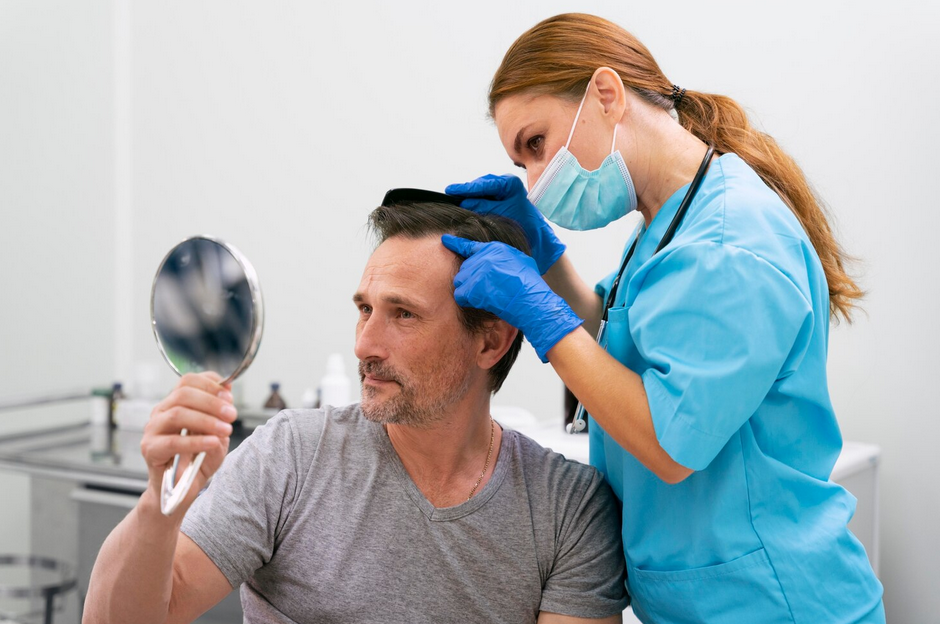
Before undergoing FUE hair transplant surgery, patients receive a detailed evaluation.
Assessment Typically Includes
-
Medical history review
-
Hair and scalp analysis
-
Donor area density assessment
-
Hairline design planning
-
Discussion of achievable density and coverage
International patients often begin with online consultations before travelling to Turkey.
How FUE Hair Transplant Is Performed
FUE hair transplant surgery is carried out in clearly defined stages.
Step 1: Donor Area Preparation
-
Donor area is trimmed or partially shaved
-
Local anaesthesia is administered
-
Hair follicles are identified for extraction
Step 2: Follicular Unit Extraction
-
Individual follicular units are removed using micro-punch devices
-
Extraction is performed carefully to preserve follicle integrity
-
Donor area heals with tiny dot scars that are usually not visible
Step 3: Recipient Area Preparation
-
Tiny channels are created in the recipient area
-
Angle, depth, and direction are planned to mimic natural hair growth
-
Hairline design is tailored to facial proportions
Step 4: Graft Implantation
-
Extracted follicles are implanted into prepared channels
-
Density is adjusted based on scalp area and blood supply
-
Symmetry and natural appearance are prioritised
The entire procedure typically lasts 4–8 hours, depending on graft number.
Anaesthesia and Comfort
FUE hair transplant is performed under local anaesthesia.
Patient Experience
-
Minimal discomfort during the procedure
-
Patients remain awake and comfortable
-
Breaks are provided during longer sessions
Hospitalisation is not usually required.
Recovery and Healing Timeline
Recovery following FUE hair transplant is gradual.
First 7–10 Days
-
Mild swelling and redness
-
Formation of small scabs around grafts
-
Avoid touching or washing until instructed
Weeks 2–4
-
Scabs fall off naturally
-
Transplanted hairs may shed temporarily (normal process)
Months 3–6
-
New hair growth begins
-
Gradual increase in density
Months 9–12
-
Final results become visible
-
Hair can be cut, styled, and treated normally
Post-Operative Care Guidelines
Following aftercare instructions is essential for graft survival.
Key Recommendations
-
Use prescribed medications as directed
-
Avoid sun exposure to the scalp initially
-
Refrain from smoking during early healing
-
Attend follow-up appointments
Proper aftercare supports long-term success.
Risks and Possible Complications
FUE hair transplant is considered safe but carries potential risks.
Possible Risks
-
Temporary swelling or redness
-
Infection (rare)
-
Folliculitis
-
Uneven early growth
Most complications are mild and resolve with appropriate care.
Longevity and Permanence of Results
Hair transplanted using FUE is considered permanent.
Key Points
-
Transplanted follicles retain donor characteristics
-
Hair grows naturally for life
-
Ongoing hair loss in non-transplanted areas may continue
Additional treatments may be considered if hair loss progresses.
FUE Hair Transplant vs Other Techniques
Key Differences
-
FUE avoids linear scarring compared to strip methods
-
Allows flexible graft placement
-
Suitable for scalp, beard, and eyebrow restoration
-
Faster recovery than older techniques
Technique selection depends on individual needs and goals.
Why Patients Consider Turkey for FUE Hair Transplant
Turkey is internationally recognised for hair transplant procedures.
Common Reasons
-
Extensive experience with FUE techniques
-
High procedural volumes and refined protocols
-
Modern clinics and advanced equipment
-
Structured care pathways for international patients
Many patients from the UK and Europe choose FUE hair transplant in Turkey for its combination of expertise and comprehensive care.
Frequently Asked Questions (FAQ)
1. Is FUE hair transplant painful?
Discomfort is minimal and managed with local anaesthesia.
2. Will the donor area be visible?
Tiny dot scars heal well and are usually not noticeable.
3. Is hair shedding after FUE normal?
Yes. Temporary shedding occurs before permanent growth begins.
4. When can I return to work?
Most patients return to work within a few days.
5. Are results permanent?
Yes. Transplanted hair grows permanently.
Conclusion
FUE hair transplant in Turkey is a reliable and minimally invasive solution for restoring hair density and improving hairline appearance. By understanding candidacy, procedural steps, recovery expectations, and potential risks, patients can make informed decisions about treatment. When performed by experienced medical teams with appropriate aftercare, FUE hair transplantation can deliver natural-looking, long-lasting results that integrate seamlessly with existing hair.
Medical Disclaimer: The information provided in this article is for general informational purposes only and should not be considered medical advice. Always consult a qualified healthcare professional before making any medical decisions.