VIP Stay at Mandarin Grove Health and Wellness Retreat
DENTAL CROWNS


[contact-form-7 id=”581″]
[contact-form-7 id=”597″]
Dental Crowns in Turkey
Dental crowns are fixed dental restorations used to restore the strength, shape, size, and appearance of damaged or weakened teeth. In Turkey, dental crown treatment is widely used in both restorative and cosmetic dentistry, often as part of smile makeovers, full-mouth rehabilitation, or post-root canal treatment. The primary goal of a dental crown is to protect the underlying tooth while restoring normal function and aesthetics.
This article provides a detailed, educational overview of dental crowns in Turkey, including what dental crowns are, when they are recommended, crown types, how the procedure is performed, recovery and aftercare, potential risks, and why international patients frequently consider Turkey for crown treatment.
What Are Dental Crowns?
A dental crown is a custom-made cap that completely covers a tooth above the gum line. It restores the tooth’s original form and function while protecting it from further damage. Crowns are permanently fixed in place using dental cement and are designed to blend naturally with surrounding teeth.
Dental crowns may be used on natural teeth or placed on top of dental implants.
When Are Dental Crowns Recommended?
Dental crowns are recommended in a variety of clinical situations.
Common Indications
-
Teeth weakened by large fillings
-
Fractured or cracked teeth
-
Teeth after root canal treatment
-
Severe tooth wear or erosion
-
Misshapen or heavily discoloured teeth
-
Support for dental bridges
-
Restoration of dental implants
Crowns help preserve teeth that might otherwise require extraction.
Types of Dental Crowns
Several materials are used for dental crowns, each with specific advantages.
Porcelain (All-Ceramic) Crowns
-
Highly aesthetic
-
Closely mimic natural tooth colour
-
Suitable for front teeth
Zirconia Crowns
-
Very strong and durable
-
Good aesthetics
-
Suitable for both front and back teeth
Porcelain-Fused-to-Metal (PFM) Crowns
-
Metal core with porcelain outer layer
-
Strong and long-lasting
-
May show a dark line at the gum over time
Metal Crowns
-
Extremely durable
-
Require minimal tooth removal
-
Usually used for back teeth
The choice of crown material depends on tooth position, bite forces, and aesthetic requirements.
Who Is a Suitable Candidate?
Dental crowns are suitable for most patients, provided the underlying tooth and gums are healthy.
Generally Suitable Candidates
-
Patients with structurally compromised teeth
-
Individuals with good oral hygiene
-
Patients without active gum disease
When Crowns May Not Be Suitable
-
Teeth with insufficient remaining structure
-
Untreated periodontal disease
-
Poor oral hygiene habits
In some cases, additional treatments such as root canal therapy or gum treatment may be required first.
Pre-Treatment Assessment in Turkey
Before crown placement, dentists in Turkey carry out a thorough evaluation.
Assessment Typically Includes
-
Clinical examination
-
Dental X-rays
-
Bite analysis
-
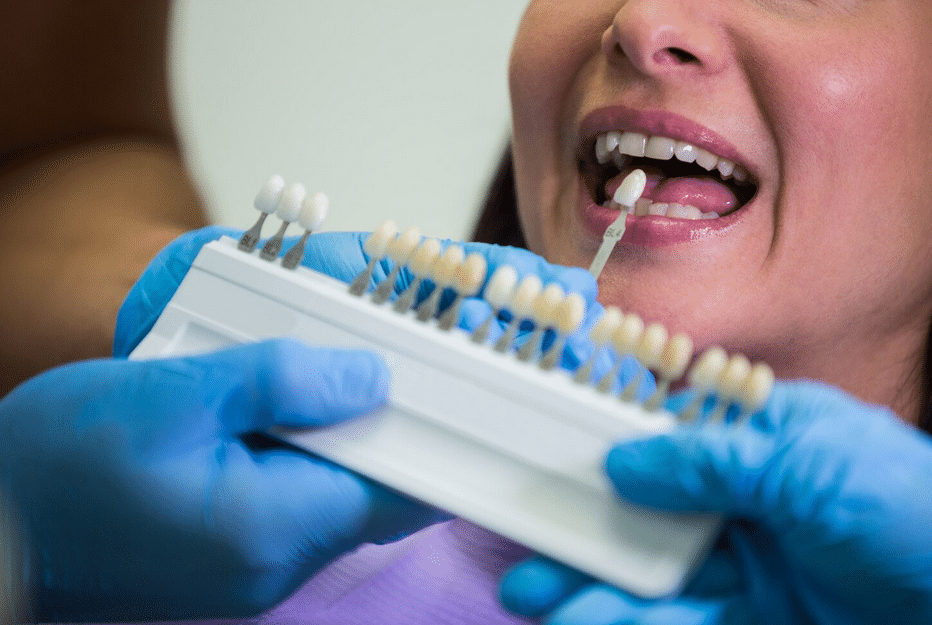
Shade selection
-
Treatment planning discussion
This ensures the crown fits correctly and functions properly.
The Dental Crown Procedure Step by Step
1. Tooth Preparation
The tooth is reshaped to create space for the crown. Any decay or old filling material is removed.
2. Impressions or Digital Scanning
An impression or digital scan is taken to create a precise model of the tooth.
3. Temporary Crown
A temporary crown may be placed to protect the tooth while the final crown is fabricated.
4. Crown Placement
Once ready, the final crown is checked for fit, colour, and bite before being permanently cemented.
The process usually takes 2 visits, though same-day crowns may be possible in selected cases.
Recovery and Aftercare
Recovery after crown placement is usually minimal.
Immediately After Treatment
-
Mild sensitivity may occur
-
Normal eating resumes once numbness wears off
Long-Term Care
-
Brush and floss daily
-
Avoid biting hard objects
-
Attend regular dental check-ups
Proper care extends the lifespan of dental crowns.
Longevity of Dental Crowns
Dental crowns are durable restorations but not permanent.
Average Lifespan
-
Typically 10–15 years or longer with good care
Factors Affecting Longevity
-
Oral hygiene
-
Bite forces and grinding
-
Crown material
-
Regular dental maintenance
Crowns may eventually need replacement due to wear or changes in surrounding teeth or gums.
Risks and Possible Complications
Dental crown treatment is considered safe, but some risks exist.
Possible Risks
-
Temporary tooth sensitivity
-
Crown loosening or detachment
-
Chipping of porcelain
-
Gum irritation
Most complications are manageable with prompt dental care.
Dental Crowns and Oral Health
Dental crowns help maintain oral health by:
-
Protecting weakened teeth
-
Restoring proper bite alignment
-
Preventing further tooth damage
They also play a key role in larger restorative treatments.
Why Patients Consider Turkey for Dental Crowns
Turkey is frequently chosen by international patients for dental crown treatment.
Common Reasons
-
Dentists experienced in restorative and cosmetic dentistry
-
Modern dental clinics and laboratories
-
Advanced digital dentistry technology
-
Structured treatment planning for international patients
Patients from the UK often choose treatment in Turkey for comprehensive dental care within a planned timeframe.
Frequently Asked Questions (FAQ)
1. Is getting a dental crown painful?
The procedure is usually performed under local anaesthesia and is generally well tolerated.
2. Can dental crowns look natural?
Yes. Modern crowns are designed to closely match natural teeth.
3. How many visits are needed?
Most cases require two visits, though some clinics offer same-day crowns.
4. Can a crown fall off?
It is uncommon, but if it happens, the crown can usually be re-cemented.
5. Do crowns require special care?
No special care beyond good oral hygiene and regular dental visits is required.
Conclusion
Dental crowns in Turkey are a widely used and effective solution for restoring damaged, weakened, or aesthetically compromised teeth. By understanding crown types, the treatment process, recovery expectations, and long-term care requirements, patients can make informed decisions about their dental health. With appropriate planning and maintenance, dental crowns provide durable function and natural-looking results.
Medical Disclaimer: The information provided in this article is for general informational purposes only and should not be considered medical advice. Always consult a qualified healthcare professional before making any medical decisions.