

We understand that considering eye surgery can be a daunting task, especially when it comes to understanding the associated costs. Lens replacement surgery is a popular procedure for individuals seeking to correct their vision. In this article, we will explore the comprehensive aspects of lens replacement surgery costs in the UK.
Rather than providing a specific figure, we will delve into the various factors that influence the final price of the procedure. This includes the different types of lens options available and how they serve different vision correction needs.
Key Takeaways
- Understanding the factors that affect lens replacement surgery costs.
- Exploring the different types of lens options available for vision correction.
- Learning about the various procedures, such as Refractive Lens Exchange (RLE) and Implantable Contact Lenses (ICL).
- Discovering what’s typically included in lens replacement surgery packages.
- Comparing NHS coverage to private treatment options.
- Finding out how to get personalised pricing information based on your specific needs.
Understanding Lens Replacement Surgery
For individuals with certain vision conditions, lens replacement surgery offers a viable solution by replacing the natural lens with an artificial one. This procedure is typically considered for those seeking to reduce or eliminate their dependence on glasses or contact lenses.
What Is Lens Replacement Surgery?
Lens replacement surgery, also known as refractive lens exchange, is a type of eye surgery where the natural lens is removed and replaced with an artificial intraocular lens (IOL). This lens replacement procedure corrects vision by addressing the root cause of refractive errors.
Types of Lens Replacement Procedures
There are primarily two types of lens replacement surgery procedures: refractive lens exchange for correcting vision in patients without cataracts, and lens replacement for cataract removal. Both procedures involve replacing the natural lens with an IOL and are performed on an outpatient basis, taking around 15-30 minutes per eye.
Lens Replacement Surgery Cost: Key Factors
The total cost of lens replacement surgery is determined by multiple factors, including the type of lens used and the complexity of the patient’s prescription. Understanding these factors is crucial for patients to make informed decisions about their treatment.
Type of Lens Used
The type of lens selected for lens replacement surgery significantly impacts the overall cost. Monofocal, multifocal, and extended depth of focus lenses are available, each with different price points. Advanced lenses, such as Trifocal Toric Lenses, are more expensive due to their sophisticated technology and benefits.
Prescription Complexity
The complexity of a patient’s prescription also affects the cost of lens replacement surgery. Patients with severe refractive errors or astigmatism may require more complex surgical approaches, potentially increasing the cost. Clinics that use tiered pricing models may charge more for complex cases.
Geographical Location in the UK
Geographical location within the UK is another factor influencing lens replacement surgery costs. Clinics in London and the South East tend to have higher prices compared to other regions. We recommend contacting us for personalised pricing information, as costs can vary significantly based on individual needs and location.
Different Types of Replacement Lenses
Replacement lenses come in different types, each designed to address specific vision needs.
Monofocal Lenses
Monofocal lenses are designed to provide clear vision at one specific distance, typically for distance vision. They are suitable for patients who want to correct their distance vision and are willing to use reading glasses for near tasks.
Multifocal Lenses
Multifocal lenses offer vision correction at multiple distances – near, intermediate, and far. This type of lens can potentially eliminate the need for reading glasses after surgery, enhancing overall visual flexibility.
Extended Depth of Focus Lenses
Extended depth of focus lenses provide a continuous range of vision from distance to intermediate. They offer advantages over traditional lens options by improving visual outcomes for a range of daily activities.
The choice of lens is a crucial decision that should be made in consultation with an eye care professional, based on individual vision requirements and lifestyle factors. We recommend discussing your options with a specialist to determine the most suitable replacement lens for your needs. For more information on lens replacement surgery and to discuss pricing, please .
Refractive Lens Exchange (RLE)
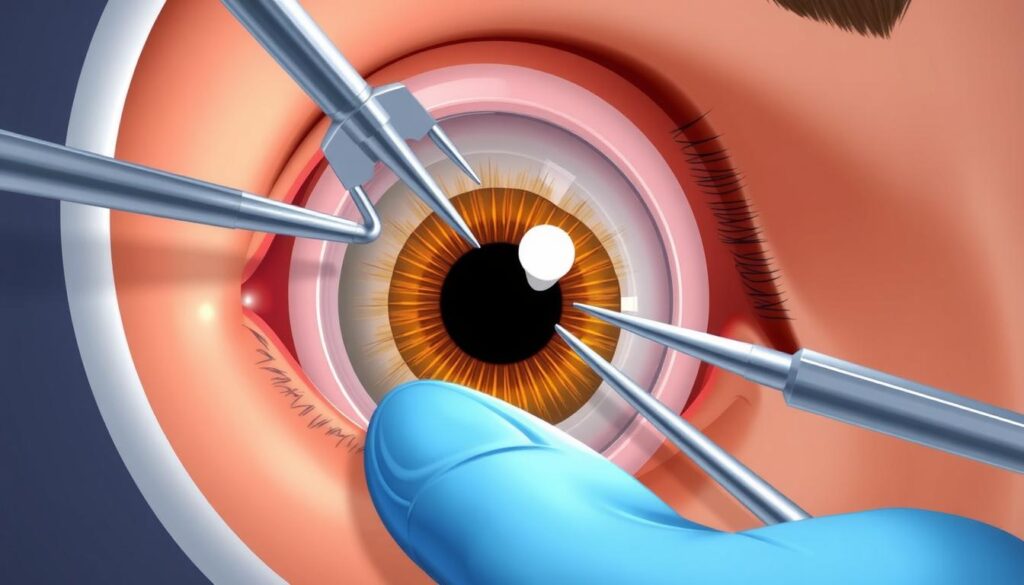
For individuals seeking to correct refractive errors, Refractive Lens Exchange (RLE) offers a highly effective solution. RLE is a surgical procedure that involves replacing the eye’s natural lens with an artificial intraocular lens to correct vision problems such as presbyopia, hyperopia, and high myopia.
What Is RLE?
RLE is an elective surgical procedure that differs from cataract surgery, as it is performed to correct refractive errors rather than to remove a cataract. The procedure involves numbing the eye, removing the natural lens, and implanting an artificial lens. This artificial intraocular lens is designed to correct the patient’s specific refractive error, providing improved vision without the need for glasses or contact lenses.
Who Is Suitable for RLE?
RLE is typically recommended for individuals over the age of 40 who suffer from presbyopia, hyperopia, or high myopia, and who may not be suitable candidates for laser eye surgery. The suitability for RLE is determined on a case-by-case basis, taking into account the patient’s overall eye health and specific vision correction needs.
The recovery process after RLE is relatively quick, with most patients able to return to their normal activities within a few days. Vision stabilisation typically occurs within a few weeks. One of the long-term benefits of RLE is its permanence, and it may also reduce the risk of developing cataracts in the future.
For more information on RLE and to discuss your suitability for the procedure, we encourage you to get in touch with us. Our team will be happy to provide you with detailed information and answer any questions you may have.
Implantable Contact Lenses (ICL)

For those looking for an alternative to lens replacement surgery, Implantable Contact Lenses (ICLs) provide a viable option. ICLs are specialised lenses placed between the iris and the natural lens, offering a corrective solution that is potentially reversible.
What Are ICLs?
Implantable Contact Lenses are designed for individuals who may not be suitable for laser eye surgery, particularly those with high prescriptions or thin corneas. Unlike replacement lenses used in Refractive Lens Exchange (RLE), ICLs preserve the natural lens, making the procedure reversible. The ICL procedure involves making a small incision in the cornea and inserting a foldable lens that unfolds once in position.
Who Is Suitable for ICLs?
ICLs are often recommended for younger patients with high prescriptions or those who have thin corneas, making them unsuitable for laser eye surgery. The suitability criteria include the patient’s overall eye health, the severity of their prescription, and the presence of any other eye conditions. We assess each patient individually to determine their suitability for ICLs.
The advantages of ICLs include their ability to correct a wide range of refractive errors, UV protection features, and the fact that they are not visible to others. The recovery process after ICL surgery is relatively quick, with most patients experiencing improved vision within a few days. However, we advise patients to avoid strenuous activities for a few weeks following the surgery to ensure optimal healing.
For more information on ICLs and to determine if you are a suitable candidate, we encourage you to contact us to discuss your options and the associated costs.
Cataract Surgery vs. Lens Replacement
While both cataract surgery and lens replacement involve lens surgery, the reasons behind each procedure differ significantly. Cataract surgery is performed to remove a cloudy lens that impairs vision, whereas lens replacement for refractive purposes is an elective procedure aimed at reducing dependence on glasses or contact lenses.
Differences Between Procedures
The key differences between cataract surgery and lens replacement lie in their medical necessity and timing. Cataract surgery is typically covered by the NHS when medically necessary, whereas elective lens replacement is usually a private procedure.
- Cataract surgery is performed to address a medical condition affecting vision.
- Lens replacement is chosen for refractive correction, improving vision without glasses.
- The NHS typically covers cataract surgery, while lens replacement is usually self-funded.
Cost Considerations
The costs associated with both procedures can vary based on several factors, including the type of lens used. Lens options can significantly impact the overall investment required for the surgery. We recommend contacting us for detailed pricing information, as costs can differ based on individual needs.
Insurance coverage also differs between the two procedures. While some insurance plans may cover cataract surgery, elective lens replacement is often not included. It’s essential to consult with an eye care professional to determine the most appropriate procedure based on your specific eye health and vision needs.
What’s Included in the Cost
Understanding what’s included in the cost of lens replacement surgery is crucial for patients to make informed decisions. The overall cost encompasses several key components that are vital for a successful surgical outcome.
Pre-operative Assessments
The cost includes thorough pre-operative assessments, such as corneal mapping, intraocular pressure testing, and measurements to determine the appropriate lens power. These assessments are essential to ensure that patients receive the most accurate treatment.
The Surgery Itself
The surgery fee typically covers the surgeon’s expertise, operating theatre costs, surgical equipment, and the intraocular lens itself. This comprehensive coverage ensures that patients receive high-quality care during the procedure.
Aftercare and Follow-up Appointments
Our lens replacement surgery packages include all necessary aftercare for the first three months following the procedure. This includes follow-up appointments, medications such as antibiotic and anti-inflammatory eye drops, and the management of any complications. To get a detailed breakdown of our all-inclusive pricing, please contact us for more information.
Financing Options for Lens Replacement Surgery

Lens replacement surgery financing options are designed to make this procedure more accessible to those in need. We understand that the cost of lens replacement surgery can be a significant concern, and we offer various financing plans to help spread the cost over several months.
Interest-Free Finance Plans
Many clinics offer 0% finance for lens surgery treatments over 10-12 months. These interest-free finance plans can be an attractive option for those who want to avoid additional interest charges. Typically, a deposit is required, and the balance is paid off within the specified period.
Long-term Payment Options
If you prefer to pay off the balance over a more extended period to reduce monthly payments, you can expect to pay around 9.5%-11.5% APR. It’s essential to check the total amount you’re repaying, as lower monthly payments over longer periods may result in paying significantly more than the original price due to the interest rate.
To apply for finance, you can contact us for personalised finance quotes based on your individual circumstances and treatment requirements. Our team will guide you through the application process, including credit checks and approval timeframes.
NHS vs. Private Lens Replacement Surgery
The UK offers both NHS and private pathways for lens replacement surgery, catering to different patient needs. When deciding between these options, it’s essential to understand the eligibility criteria and benefits associated with each.
NHS Eligibility Criteria
The NHS typically covers lens replacement surgery when it is deemed medically necessary, such as in cases of cataracts. To qualify, patients usually need to meet specific visual acuity thresholds and demonstrate significant functional impairment.
The criteria for NHS eligibility include:
- Significant visual impairment due to cataracts
- Visual acuity thresholds, typically measured as a Snellen chart score
- Impact on daily life, such as difficulty with reading, driving, or other daily activities
It’s worth noting that the NHS prioritizes cases based on medical necessity, which can sometimes result in waiting times for surgery.
Benefits of Private Treatment
Opting for private lens replacement surgery offers several advantages. These include shorter waiting times, a greater choice of lens types, and the ability to undergo surgery before cataracts significantly impact daily life.
Private treatment allows patients to select from a range of premium lens options, potentially leading to better visual outcomes tailored to their lifestyle needs. Additionally, private clinics often provide comprehensive aftercare packages and a more personalized patient experience throughout the treatment journey.
The benefits of private lens replacement surgery include:
- Reduced waiting times for surgery
- Access to a wider range of lens options, including premium lenses
- Personalized care and comprehensive aftercare support
For those considering lens replacement surgery, it’s crucial to weigh these factors and discuss options with a healthcare professional. To find out more about your suitability for lens replacement surgery and to inquire about pricing, we recommend contacting a relevant healthcare provider directly.
Preparing for Your Consultation

To ensure you get the most out of your lens replacement surgery consultation, it’s essential to be well-prepared. Bring your current glasses or contact lens prescription, a list of medications, and your complete eye health history to the consultation.
During the consultation, various eye tests and measurements will be performed to assess your suitability for lens replacement surgery. Be prepared to ask questions about the surgeon’s experience, the specific lens options recommended for your vision needs, and what to expect during recovery.
Some clinics may offer a free initial consultation, while others may charge a fee that is deducted from the cost of surgery if you proceed. To prepare your eyes, avoid wearing contact lenses for a specified period beforehand if applicable. Our consultations are designed to be informative and pressure-free, providing you with all the information you need to make an informed decision.
Conclusion
Lens replacement surgery offers a life-changing solution for individuals seeking to improve their vision. Throughout this article, we’ve explored the various factors that influence the cost of lens replacement surgery, including the type of lens used, prescription complexity, and geographical location.
It’s essential to consider all aspects of lens replacement surgery beyond just the cost, including the surgeon’s expertise, the technology used, and the quality of aftercare provided. A comprehensive consultation is necessary to determine the exact cost for your specific situation and assess your individual eye health and vision needs.
To get personalised advice and pricing information tailored to your unique circumstances, please contact us directly. We can guide you through the process and help you make an informed decision about your lens replacement surgery.
FAQ
What is the average price of refractive lens exchange?
The average price of refractive lens exchange varies depending on several factors, including the type of lens used, the complexity of the prescription, and the geographical location in the UK. We provide a detailed breakdown of the costs involved.
How much does laser eye surgery typically cost?
Laser eye surgery costs differ from lens replacement surgery. The price depends on the specific procedure, the surgeon’s fees, and the clinic’s location. We offer competitive pricing for various eye surgery options.
What are the benefits of choosing a multifocal lens?
Multifocal lenses provide multiple focal points, enabling patients to see clearly at various distances. This type of lens is particularly beneficial for individuals with presbyopia or those who want to reduce their dependence on reading glasses.
Can I use interest-free finance plans to pay for my lens replacement surgery?
Yes, we offer interest-free finance plans to help make lens replacement surgery more affordable. Our financing options allow patients to spread the cost over several months, making it easier to budget for the procedure.
How long does it take to recover from refractive lens exchange?
The recovery time for refractive lens exchange is typically short, with most patients experiencing improved vision within a few days. However, it may take several weeks for the eyes to fully stabilise.
Are monofocal lenses suitable for patients with astigmatism?
Monofocal lenses can be used to correct astigmatism, but the outcome depends on the severity of the condition and the type of lens used. Our experienced surgeons will assess the patient’s prescription and recommend the most suitable lens option.
What is the difference between NHS and private lens replacement surgery?
The main difference between NHS and private lens replacement surgery lies in the eligibility criteria, waiting times, and level of personalised care. Private treatment offers more flexibility and tailored care, while NHS treatment is generally more restricted.
Do I need to stay overnight in hospital after lens replacement surgery?
No, lens replacement surgery is typically performed as a day-case procedure, allowing patients to return home the same day. Our clinics provide comprehensive aftercare and follow-up appointments to ensure a smooth recovery.


