

For many individuals in the UK, laser eye surgery is a viable option to correct vision problems. As an elective, cosmetic refractive surgery, it is typically not covered by the NHS unless there are serious medical indications.
We will explore the factors that influence the cost of this procedure and why prices can vary significantly between different providers and procedures. Understanding the true value of laser eye surgery requires looking beyond the headline price to consider the long-term benefits and potential savings.
Our comprehensive guide will help you navigate the various aspects of laser eye surgery costs without quoting specific prices. By the end of this guide, you’ll be equipped to make informed decisions about your vision correction options and understand what questions to ask when enquiring about costs.
Key Takeaways
- Factors influencing the cost of laser eye surgery.
- The importance of considering long-term benefits.
- Understanding what’s typically included in quoted prices.
- Evaluating whether laser eye surgery represents good value.
- How to contact us for personalised pricing information.
Understanding Laser Eye Surgery and Its Value
For many, laser eye surgery offers a life-changing solution to dependence on glasses or contact lenses. This surgical treatment has revolutionised the way we correct vision problems, offering a long-term solution to eye issues.
What Laser Eye Surgery Actually Involves
Laser eye surgery permanently reshapes the surface of your cornea. The procedure involves using a laser to correct the shape of the cornea, improving how the eye focuses light onto the retina. This treatment does not “wear off” like glasses or contact lenses might, though vision can continue to change with age.
The Long-Term Benefits of Laser Vision Correction
The benefits of laser eye surgery are numerous. Key advantages include:
- Laser vision correction offers lasting results, potentially freeing you from glasses or contact lenses for many years.
- The financial investment in laser eye surgery can be weighed against the ongoing costs of glasses and contact lenses.
- Beyond financial considerations, the surgery provides lifestyle benefits, including freedom for sports and activities, and improved self-confidence.
- Many patients report improved career opportunities and performance where optimal vision is advantageous.
- The psychological benefits of waking up with clear vision are significant, with many describing it as life-changing.
- Long-term outcomes include both tangible savings and intangible quality of life improvements.
By understanding what laser eye surgery involves and its long-term benefits, individuals can make informed decisions about their eye health and vision correction options.
Different Types of Laser Eye Surgery Procedures
Laser eye surgery is not a one-size-fits-all solution; instead, it comprises various techniques designed to correct different vision problems. The choice of procedure depends on several factors, including the patient’s prescription, corneal thickness, and lifestyle needs.

LASIK Surgery
LASIK (Laser-Assisted In Situ Keratomileusis) surgery is one of the most commonly performed laser eye surgeries. It involves creating a thin flap in the cornea, which is gently lifted to allow the laser to reshape the underlying tissue. This procedure is known for its relatively quick recovery time and high success rate.
SMILE Procedure
The SMILE (Small Incision Lenticule Extraction) procedure is a more recent advancement in laser eye surgery. It involves creating a small incision in the cornea through which a lenticule is removed, thereby reshaping the cornea. SMILE is considered to be a minimally invasive procedure with potentially fewer complications.
Surface Laser Treatments (LASEK and TransPRK)
Surface laser treatments, including LASEK (Laser-Assisted Sub-Epithelial Keratectomy) and TransPRK (Transepithelial Photorefractive Keratectomy), involve removing the outer layer of the cornea to allow for laser reshaping. These procedures are often recommended for patients with thinner corneas or those who are at risk of eye injury.
Image comparing LASEK and TransPRK procedures
Presbyond and Blended Vision Treatments
Presbyond and blended vision treatments are specialised laser eye surgery procedures designed for patients over 40 experiencing presbyopia. These innovative treatments create a controlled difference between the eyes, optimising one for distance vision and the other for intermediate or near vision. This allows the brain to blend the images for clear vision at all distances.
- These treatments can be life-changing for individuals reliant on reading glasses or bifocals.
- The suitability assessment for blended vision is thorough, often including a trial with contact lenses.
- As specialised treatments, Presbyond and blended vision procedures may have different cost considerations compared to standard laser vision correction.
Image illustrating Presbyond and blended vision treatments
Key Factors That Influence Laser Eye Surgery Costs
Understanding the factors that influence laser eye surgery costs is crucial for making an informed decision. Several elements contribute to the overall expense, and being aware of these can help you prepare for the process.

Your Prescription and Eye Health
The complexity of your prescription and the overall health of your eyes play a significant role in determining the cost of laser eye surgery. More complex prescriptions may require advanced technology or additional procedures, increasing the overall cost.
Technology and Equipment Used
The type and quality of laser technology used during the surgery can significantly impact the cost. Advanced laser eye surgery equipment and techniques may be more expensive, but they can also provide more precise results and faster recovery times.
Surgeon Experience and Clinic Reputation
The experience and reputation of the surgeon and the clinic can also influence the cost of eye surgery. More experienced surgeons and reputable clinics may charge higher fees due to their expertise and the quality of care provided.
Location and Regional Variations
Laser eye surgery costs can vary significantly depending on the location of the clinic. Clinics in major cities like London tend to charge more than those in smaller towns or regional areas, largely due to differences in operating costs and demand.
- Geographical location significantly impacts laser eye surgery costs.
- Clinics in London and other major cities typically charge more than those in smaller towns.
- Regional variations in pricing don’t necessarily reflect differences in quality or outcomes.
For personalised pricing information, we recommend contacting us directly to discuss your specific needs and circumstances.
What’s Typically Included in Laser Eye Surgery Costs

Understanding the components of laser eye surgery costs is crucial for making an informed decision. The overall cost encompasses several key elements that contribute to the success and safety of the procedure.
Pre-Operative Consultations and Assessments
Before undergoing laser eye surgery, comprehensive pre-operative consultations and assessments are conducted to ensure suitability for the procedure. These assessments include a thorough examination of your eye health and a detailed discussion of your expectations and any concerns you may have.
The Procedure Itself
The surgery itself is a critical component of the overall cost. The technology and expertise involved in performing laser eye procedures require significant investment, which is reflected in the pricing.
Aftercare and Follow-Up Appointments
Aftercare is a vital aspect of eye surgery, ensuring a smooth recovery and optimal visual outcomes. This typically includes several follow-up appointments to monitor healing and address any complications. Standard post-operative care includes medications such as antibiotic drops, anti-inflammatory drops, and lubricating eye drops.
When comparing laser eye surgery costs, it’s essential to consider the extent and quality of aftercare provided, as this can significantly impact your overall satisfaction and visual results. We recommend contacting us to discuss the specifics of what’s included in our pricing.
Laser Eye Surgery Costs Compared to Glasses and Contact Lenses
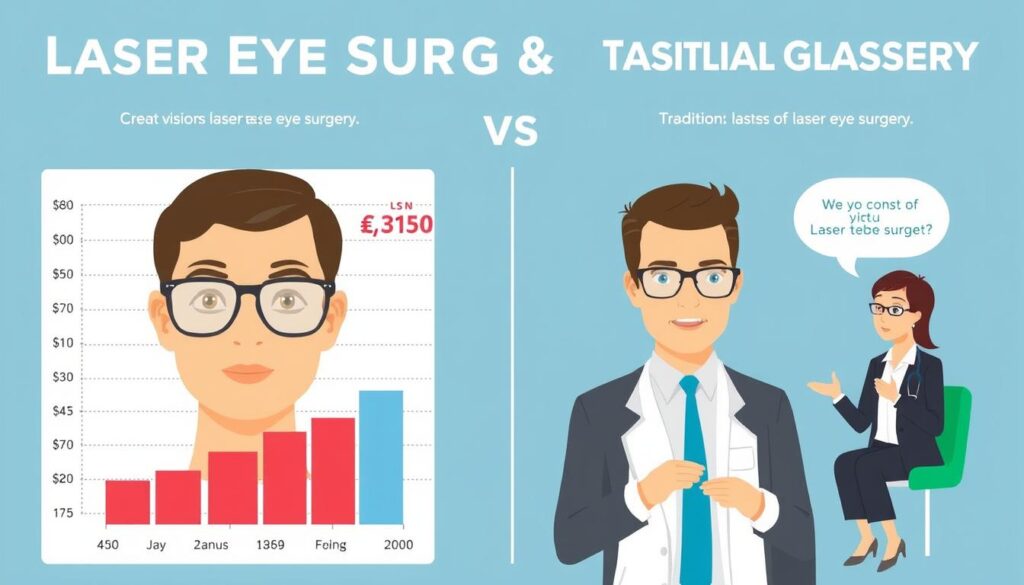
Understanding the financial commitment required for laser eye surgery involves comparing it to the long-term costs associated with corrective eyewear. While the initial expense of laser eye surgery may seem significant, it’s crucial to weigh this against the ongoing costs of glasses and contact lenses.
Long-Term Cost Analysis
When considering the cost of laser eye surgery, it’s essential to factor in the long-term financial implications. The cumulative cost of glasses and contact lenses over many years can be substantial. Laser eye surgery, on the other hand, is a one-time expense that can potentially eliminate the need for corrective eyewear.
Quality of Life Considerations
Beyond financial calculations, the true value of laser eye surgery often lies in the significant quality of life improvements. Freedom from the daily hassles of glasses and contact lenses represents a major lifestyle enhancement. Activities like swimming, sports, and outdoor pursuits become more enjoyable without the limitations of corrective eyewear. Many patients report improved self-confidence and professional opportunities following laser eye surgery.
The simple pleasure of waking up able to see clearly without reaching for glasses or inserting contact lenses is frequently cited by patients as being worth the investment alone. When considering laser eye surgery costs, it’s essential to factor in these quality of life benefits that extend far beyond the purely financial aspects of the decision.
NHS and Insurance Coverage for Laser Eye Surgery
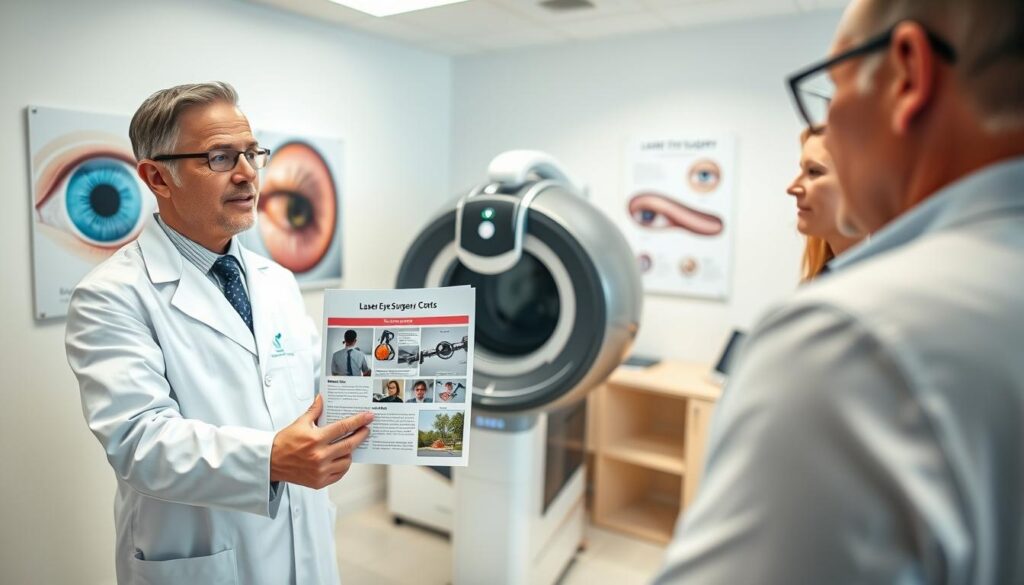
Laser eye surgery, while a life-changing procedure, raises questions about its coverage under the NHS and private health insurance. The extent of coverage can significantly impact the decision-making process for those considering this surgery.
When the NHS Might Cover Laser Eye Surgery
The NHS typically covers laser eye surgery in specific circumstances, such as when it is deemed medically necessary rather than for cosmetic or refractive purposes. For instance, individuals with certain eye conditions or those who have experienced trauma may be eligible for NHS coverage.
It’s essential to consult with an NHS professional to determine eligibility, as coverage is assessed on a case-by-case basis.
Private Health Insurance and Laser Eye Surgery
Most standard private health insurance policies in the UK explicitly exclude coverage for laser eye surgery when performed for refractive correction. However, some comprehensive or upgraded policies may include a limited optical or “laser eye surgery” benefit, providing a fixed cash amount towards the surgery.
Key considerations when reviewing private health insurance policies include:
- References to “refractive surgery,” “laser eye surgery,” or “optical benefits”
- Any waiting periods or exclusions
- Whether the benefit is per eye, per procedure, or per policy year
It’s crucial not to assume that insurance will cover the full amount, as most individuals will still need to pay a significant portion of the cost themselves.
For personalised pricing information and to discuss your options, contact us today.
Financing Options for Laser Eye Surgery

We understand that the cost of laser eye surgery can be a barrier, which is why we offer a range of finance options to suit different needs. Our financing solutions are designed to make the treatment more accessible, allowing you to enjoy the benefits of improved vision without the immediate financial burden.
Monthly Payment Plans
Our monthly payment plans are tailored to fit various budgets, enabling you to undergo laser eye surgery without having to pay the full amount upfront. By spreading the cost over several months, you can better manage your finances while still benefiting from this life-changing procedure.
To apply, simply speak with our staff, who will guide you through the available options and help you choose the most suitable plan. The application process is straightforward and can be completed online or in-person, with decisions typically made within minutes.
Interest-Free Credit Options
One of the most attractive financing options for laser eye surgery is our interest-free credit, allowing you to spread the cost over a fixed period without incurring additional interest charges. Typically, these arrangements run for 10-12 months, although some promotions may offer longer interest-free periods.
- Eligibility: You’ll need to pass a credit check, be over 18, and have been a UK resident for at least 11 months.
- Deposit: A minimum deposit is usually required, often around 10-20% of the total treatment cost.
- Monthly Payments: The remaining balance is divided into equal monthly payments, making it easier to manage your expenses.
By choosing our interest-free credit options, you can enjoy the benefits of laser eye surgery while paying the same amount as you would with an upfront payment, but with the flexibility of spreading the cost over time.
Contact Us for Personalised Pricing Information
With so many factors influencing the cost of laser eye surgery, it’s essential to have a personalised consultation to determine the best course of treatment for your unique needs. Every patient’s eyes are different, and factors such as your prescription, corneal characteristics, and the most suitable treatment all impact the final cost.
During your consultation, our experienced team will conduct a comprehensive assessment of your eyes, discuss all suitable treatment options, and provide transparent pricing information with no hidden costs or surprises. We’ll also explain all available payment options, including interest-free finance plans that allow you to spread the cost of treatment over several months.
To receive personalised pricing information based on your specific vision correction needs, please contact us today to arrange your initial consultation. We’re committed to helping you understand exactly what’s included in our laser eye surgery packages, from pre-operative consultations through to comprehensive aftercare.
FAQ
What is the average price of laser vision correction?
The average price can vary depending on several factors, including the type of procedure and the clinic. We provide personalised pricing information during your consultation.
How long does the laser vision correction procedure take?
The actual procedure typically takes around 30 minutes per eye, although you should allow a few hours for the entire appointment, including preparation and recovery time.
Is laser vision correction painful?
We use numbing drops to minimise discomfort during the procedure. Some patients may experience mild discomfort or dryness after the treatment, but this usually resolves quickly.
How long does it take to recover from laser vision correction?
Most patients can return to their normal activities within a few days. Your vision may be blurry or hazy immediately after the procedure, but this typically improves within a few days.
Will I need to wear glasses or contact lenses after laser vision correction?
For most patients, laser vision correction significantly reduces or eliminates the need for glasses or contact lenses. However, some patients may still require glasses for certain tasks, such as reading or driving at night.
Can I have laser vision correction if I have astigmatism?
Yes, laser vision correction can be used to treat astigmatism, as well as nearsightedness and farsightedness. Our experienced surgeons will assess your suitability during your consultation.
How do I know if I am a suitable candidate for laser vision correction?
We will assess your eyes during a comprehensive consultation to determine your suitability for laser vision correction. This includes evaluating your prescription, corneal thickness, and overall eye health.
What aftercare is required following laser vision correction?
We provide detailed aftercare instructions to ensure a smooth recovery. This typically includes using lubricating drops, attending follow-up appointments, and avoiding certain activities for a short period.


