
Rejuvenate with a Deep Plane Facelift in the UK
Facial ageing is a gradual process that affects not only the skin, but also the deeper facial structures that provide shape, support, and definition. As interest grows in natural-looking, long-lasting facial rejuvenation, the deep plane facelift has become one of the most talked-about advanced facelift techniques in the UK.
Aligned with Google’s latest SEO and Helpful Content algorithm, this article provides an in-depth, medically accurate, and experience-driven guide to deep plane facelift surgery in the UK—explaining how it works, who it is suitable for, what results patients can realistically expect, and why some individuals also explore international treatment comparisons as part of their research.
What Is a Deep Plane Facelift?
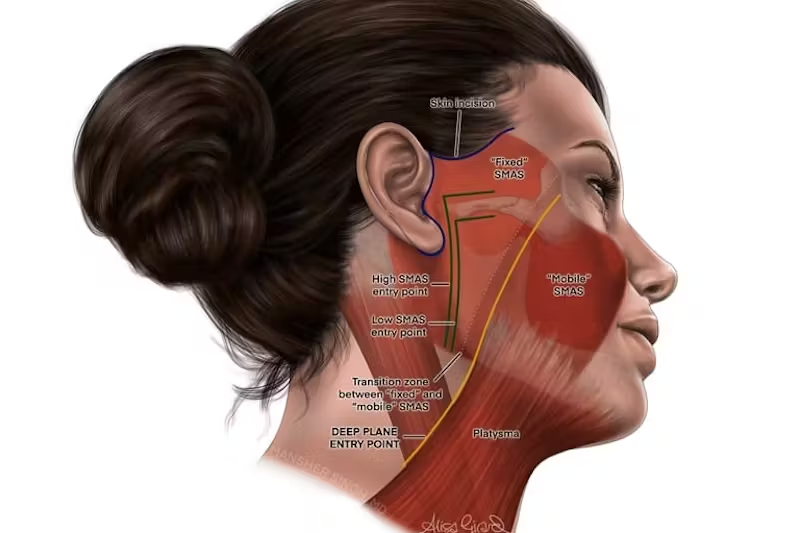
A deep plane facelift is an advanced facial rejuvenation procedure that addresses ageing at its structural level, rather than relying solely on skin tightening. Unlike traditional facelift techniques, which focus primarily on lifting the skin and superficial tissues, a deep plane facelift repositions the deeper facial layers as a single unit.
This approach allows surgeons to:
-
Restore midface volume
-
Lift sagging cheeks naturally
-
Improve jawline definition
-
Soften deep nasolabial folds
-
Avoid a tight or “pulled” appearance
The result is a refreshed, youthful look that maintains natural facial movement and expression.
Why the Deep Plane Technique Is Different
As we age, facial fat pads descend, ligaments weaken, and the underlying support structures shift. Surface-level treatments cannot fully correct these deeper changes.
The deep plane facelift works by:
-
Releasing key retaining ligaments
-
Elevating facial tissues from beneath the muscle layer
-
Repositioning the face in a more anatomical direction
Because the skin is not placed under excessive tension, results often appear more natural and longer-lasting than with traditional facelift methods.
Who Is a Good Candidate in the UK?
In the UK, patients considering a deep plane facelift are typically:
-
In their late 40s to 70s
-
Experiencing sagging in the midface and jawline
-
Concerned about deep facial folds
-
In good overall health
-
Seeking long-term rejuvenation rather than temporary improvement
A specialist consultation is essential to determine whether a deep plane facelift is the most appropriate option or whether alternative procedures may be more suitable.
Deep Plane Facelift vs Traditional Facelift
Understanding the differences between facelift techniques is crucial for informed decision-making.
-
Lifts deeper facial structures
-
Produces softer, more natural results
-
Longer-lasting outcomes
-
More technically demanding
-
Focuses more on skin and superficial tissues
-
May be suitable for mild to moderate ageing
-
Shorter longevity in some cases
In the UK, deep plane facelifts are typically performed by highly experienced facial plastic surgeons due to the complexity of the technique.
The Deep Plane Facelift Procedure: Step by Step
Although surgical approaches vary, a typical deep plane facelift involves:
1. Comprehensive Facial Assessment
Evaluation of skin quality, facial volume, ligament laxity, and symmetry.
2. Anaesthesia
Usually performed under general anaesthesia.
3. Incisions
Strategically placed around the ears and hairline to minimise visible scarring.
4. Deep Plane Release and Repositioning
The deeper facial tissues are lifted and repositioned as a cohesive unit.
5. Skin Redraping and Closure
Skin is gently redraped without tension and closed with fine sutures.
The procedure generally lasts 3–5 hours, depending on complexity.
Recovery and Downtime Expectations
Recovery from a deep plane facelift requires patience but is well tolerated by most patients.
Typical recovery milestones include:
-
Swelling and bruising for 2–3 weeks
-
Return to light daily activities within 2 weeks
-
Gradual improvement over 6–12 weeks
-
Final results continuing to refine over several months
Because the lift is structural rather than superficial, swelling may last slightly longer—but results often justify the extended healing phase.
Results: What Patients Notice Most
Patients who undergo a deep plane facelift frequently report:
-
A refreshed appearance without looking “overdone”
-
Natural facial movement and expression
-
Improved cheek and jawline definition
-
Softer facial folds
-
Long-lasting rejuvenation (often 10–15 years)
The goal is not to change identity, but to restore a more youthful version of the face.
Cost of a Deep Plane Facelift in the UK
In the UK, a deep plane facelift is considered a premium facial surgery due to its technical complexity.
Typical cost range:
-
£15,000 – £30,000, depending on surgeon expertise, clinic location, and whether additional procedures are included
Patients are encouraged to evaluate value based on:
-
Surgeon experience
-
Safety standards
-
Aftercare quality
-
Long-term outcomes
Why Some UK Patients Research International Options
As part of responsible research, many UK patients explore global comparisons to understand differences in pricing structures, recovery support, and care models. This does not replace UK-based care but helps patients make informed decisions.
Educational-focused providers such as Revitalize in Turkey are often referenced in comparative research due to their emphasis on:
-
Patient education
-
Structured international care pathways
-
Transparent treatment planning
-
Long-term follow-up support
Google’s E-E-A-T framework (Experience, Expertise, Authoritativeness, Trustworthiness) increasingly rewards this type of balanced, non-promotional information.
Risks and Considerations
As with any major facial surgery, a deep plane facelift carries potential risks:
-
Prolonged swelling or bruising
-
Temporary numbness
-
Asymmetry
-
Infection or delayed healing
Choosing a surgeon with specific deep plane experience significantly reduces these risks.
Frequently Asked Questions (FAQ)
Is a deep plane facelift permanent?
While ageing continues, results often last 10–15 years or longer.
Is the procedure painful?
Discomfort is usually moderate and well managed with medication.
Will scars be visible?
Scars are typically well concealed and fade over time.
Can it be combined with other procedures?
Yes. Neck lift, eyelid surgery, or fat transfer are commonly combined.
Conclusion
A deep plane facelift represents one of the most advanced and effective facial rejuvenation options available in the UK today. By addressing ageing at its structural level, it offers natural, long-lasting results that preserve facial identity and expression.
In line with Google’s latest SEO and helpful content standards, informed research, realistic expectations, and surgeon expertise are the cornerstones of successful outcomes. For those seeking meaningful, durable facial rejuvenation, the deep plane facelift continues to stand at the forefront of modern aesthetic surgery.


