
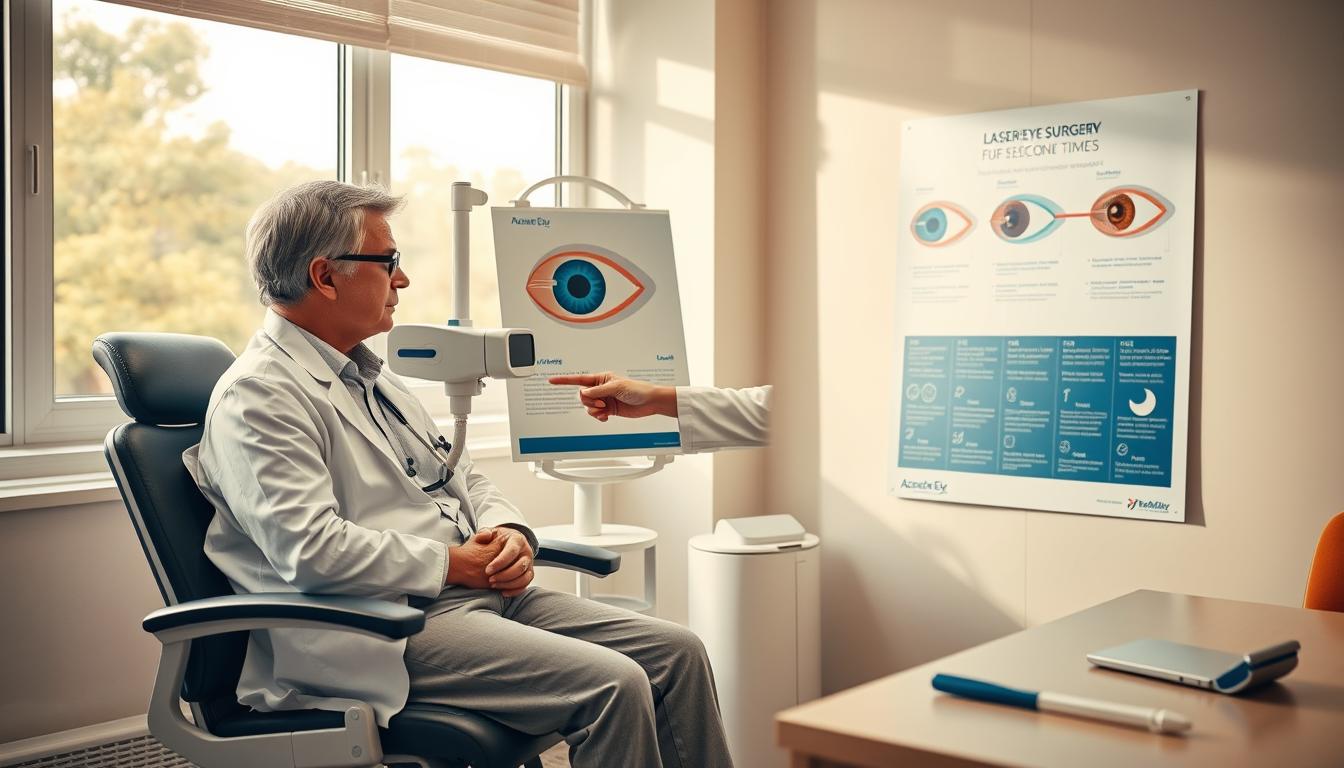
We are often asked whether it’s possible to undergo laser eye surgery more than once. The answer is yes, but it’s worth noting that the vast majority of our patients do not require a second procedure.
The changes made to the cornea during laser eye surgery are generally permanent. However, there are specific circumstances where a second treatment might be beneficial or necessary. We will explore these circumstances and provide clear information on the possibilities and limitations of undergoing eye surgery more than once.
Key Takeaways
- Undergoing laser eye surgery more than once is possible but not usually necessary.
- Permanent changes are made to the cornea during the initial surgery.
- A second procedure may be required in specific circumstances.
- Most patients achieve excellent results from their first laser eye surgery.
- For those requiring a second treatment, modern options are available.
Understanding Laser Eye Surgery Permanence
Many individuals considering laser eye surgery wonder about the durability of its results. Laser eye surgery is a procedure that permanently reshapes the cornea to correct vision problems such as short-sightedness, long-sightedness, and astigmatism.
How Laser Eye Surgery Works
Laser eye surgery works by using a laser to reshape the cornea, the clear dome-shaped surface at the front of the eye. This reshaping ensures that light is properly refracted onto the retina, providing clear vision. The laser treatment is tailored to the individual’s specific refractive error, making precise adjustments to the cornea to achieve optimal results.
Permanent Corneal Changes vs. Natural Eye Aging
The changes made to the cornea during laser eye surgery are permanent. However, it’s essential to distinguish between the permanence of the corneal reshaping and the natural aging process that affects all eyes. While laser eye surgery corrects vision at the time of the procedure, it cannot prevent age-related changes, such as presbyopia, which typically starts around the age of 40. This natural process can lead to the need for reading glasses, regardless of whether one has had laser eye surgery.
Can You Get Laser Eye Surgery Twice?
Many individuals wonder if they can undergo laser eye surgery more than once. The answer to this question is crucial for those who have already had the procedure and are now experiencing changes in their vision.
The Simple Answer
Yes, most people can safely undergo laser eye surgery multiple times if needed. This is because the procedure creates permanent changes to the cornea, correcting vision based on the eye’s condition at the time of surgery.
Common Misconceptions About Laser Eye Surgery “Wearing Off”
A common misconception is that laser eye surgery “wears off” over time. However, the corneal reshaping is permanent; what occurs is natural eye aging, which can lead to new vision changes. These changes might necessitate a second procedure, often referred to as an enhancement or retreatment.
It’s essential to understand that the original laser eye surgery corrects vision as it exists at the time of treatment but cannot prevent future vision changes due to natural aging processes. Only a small percentage of patients (typically 1-5%) require enhancement procedures shortly after their initial surgery.
Why Someone Might Need a Second Procedure
While laser eye surgery can significantly improve vision, certain circumstances may necessitate a follow-up procedure. Several factors can contribute to the need for a second operation, which we will explore in detail below.
Under or Over-Correction Issues
Under-correction occurs when the laser treatment doesn’t fully correct the refractive error, leaving some residual short-sightedness, long-sightedness, or astigmatism. Conversely, over-correction happens when the laser removes too much tissue, potentially creating a new refractive error.
Regression of Visual Acuity
Regression of visual acuity is another reason for a second procedure, where the cornea partially returns to its original shape over time, causing some of the original vision problem to return.
Age-Related Vision Changes
Age-related vision changes, particularly presbyopia, can affect everyone around age 40-45, regardless of whether they’ve had laser eye surgery. Presbyopia creates the need for reading glasses even in patients who achieved perfect distance vision through laser eye surgery.
Persistent Vision Problems
Persistent vision problems, such as glare, halos, or night vision difficulties, might remain after the initial surgery. These issues can potentially be improved with enhancement procedures.
Determining If You’re a Candidate for a Second Procedure
Determining suitability for a second laser eye surgery procedure involves a comprehensive evaluation. We assess various factors to decide if you’re a candidate for another laser eye procedure.
Vision Stability Requirements
Your vision must be stable for at least a year before considering a repeat LASIK procedure. Typically, we recommend waiting 3-6 months after the original surgery to ensure complete healing. The waiting period varies based on the original correction: short-sighted patients should wait at least 6 months, while long-sighted patients need 9 months.
Corneal Evaluation Process
Corneal thickness is crucial in determining if you can have a second procedure. Each laser surgery removes corneal tissue, so sufficient remaining tissue is necessary for safe retreatment. We examine your corneas using advanced techniques to measure corneal thickness and detect any irregularities.
Medical Contraindications
Certain medical conditions may prevent a second laser eye surgery. These include severe dry eye syndrome, autoimmune conditions, uncontrolled diabetes, corneal abnormalities, and cataracts. We carefully evaluate these conditions before recommending a second procedure.
Age Considerations
There’s no strict upper age limit for laser eye surgery retreatment. However, age-related changes can affect your options. Between 40-45, presbyopia develops, and we might suggest techniques like blended vision instead of standard retreatment.
Modern Options for Retreatment
The evolution of laser eye surgery has led to improved outcomes for patients. Over the years, significant advancements have been made, offering more choices for those considering retreatment.
Advances in Technology
Laser eye surgery technology has made huge strides in the last 20 years. The early days of LASIK relied on mechanical blades (microkeratomes) to create the corneal flap. However, bladeless LASIK with femtosecond laser technology became the standard practice since the 2000s, creating precise and adjustable corneal flaps that reduce complications. Modern LASIK now employs wavefront-guided technology to measure specific flaws in each patient’s eye, resulting in highly tailored vision correction.
Alternatives for Thin Corneas
Patients with corneas too thin for traditional LASIK retreatment have several excellent options. Photorefractive Keratectomy (PRK) is a viable choice, reshaping the cornea directly after removing its outer layer. Small Incision Lenticule Extraction (SMILE) is another option, using a femtosecond laser to make tiny corneal incisions. For patients over 40 experiencing presbyopia, Refractive Lens Exchange may be considered, replacing the natural lens with an artificial intraocular lens.
To learn more about these options and their suitability for your specific needs, please contact us for further information.
Recovery and Results After Your Second Eye Surgery
After undergoing a second laser eye surgery, patients often experience a smoother and faster recovery compared to their initial procedure. This is due to the advancements in technology and the fact that the eye is already familiar with the surgical process.
What to Expect During Healing
During the healing process, most patients experience significant vision improvement within 24 hours after enhancement surgery, with 80-90% of healing occurring on the first day. Some temporary symptoms may include mild discomfort, blurred vision, light sensitivity, and dry eyes. These symptoms typically resolve within a few days to weeks. To ensure optimal healing, it is essential to use prescribed eye drops, avoid touching the eyes, and attend all scheduled follow-up appointments.
Success Rates for Enhancement Procedures
The results from enhancement procedures are remarkably good, with about 95% of eyes reaching their target prescription within three months. A year later, 86% of patients see 20/20 or better. Moreover, 83% of patients see as well or better without glasses after enhancement than they did with glasses before surgery.
Long-term Vision Stability
Enhancement procedures give most patients better vision that lasts for years or decades. Research shows that vision becomes stable 3-6 months after the procedure and remains steady for 10-20 years. However, natural eye aging continues, and people over 40 might develop presbyopia, requiring different vision correction approaches.
Conclusion
As we conclude our exploration of laser eye surgery, it’s clear that advancements in technology have made enhancement procedures safer and more effective. Most patients achieve lasting results from their original procedure, and those who require a second treatment can expect excellent outcomes after a thorough review.
The changes made to the cornea during laser eye surgery are permanent, but natural eye aging continues, and may necessitate further vision correction in the future. We have discussed the main reasons why someone might consider a second laser eye surgery procedure, including under or over-correction, regression of visual acuity, age-related vision changes, and persistent vision problems.
To determine candidacy for a second procedure, a comprehensive evaluation of vision stability, corneal health, medical history, and age-related factors is crucial. With modern LASIK technology, enhancement procedures have become more reliable, offering patients a high success rate of achieving their target vision correction.
We encourage readers to maintain regular eye examinations to monitor their vision and eye health, even after successful laser eye surgery. For more information about laser eye surgery options, including enhancement procedures, please contact us to discuss your individual needs and determine the best course of treatment.
FAQ
Is it possible to have refractive lens exchange surgery after having LASIK?
Yes, it is possible to have refractive lens exchange surgery after having LASIK. We assess the condition of our patients’ eyes to determine the best course of treatment.
How long after the initial LASIK procedure should I wait before having a second procedure?
Typically, we recommend waiting at least 6-12 months after the initial LASIK procedure to allow for stabilisation of vision. However, the exact waiting period may vary depending on individual circumstances.
What are the risks associated with having a second LASIK procedure?
As with any surgical procedure, there are risks associated with a second LASIK procedure, including dry eye, infection, and under or over-correction. We discuss these risks in detail during the consultation process.
Will I need to wear glasses after a second LASIK procedure?
The need for glasses after a second LASIK procedure depends on various factors, including the severity of the initial prescription and any age-related changes. We assess the likelihood of needing glasses during the consultation.
How do I know if I’m a suitable candidate for a second LASIK procedure?
To determine suitability, we conduct a comprehensive eye examination, including a corneal evaluation, to assess the health of the eyes and the presence of any conditions that may affect the outcome.
What are the alternatives to a second LASIK procedure for treating presbyopia?
Alternatives to a second LASIK procedure for treating presbyopia include monovision LASIK, multifocal intraocular lenses, and corneal inlays. We discuss the pros and cons of each option during the consultation.
How long does it take to recover from a second LASIK procedure?
The recovery time for a second LASIK procedure is typically similar to the initial procedure, with most patients experiencing improved vision within a few days to a week.
Are the results of a second LASIK procedure as effective as the initial procedure?
The effectiveness of a second LASIK procedure depends on various factors, including the reason for the second procedure and the overall health of the eyes. We discuss the expected outcomes during the consultation.


