
Deep Plane Facelift Cost in the UK: What to Expect and Why Patients Compare Options with Turkey
A deep plane facelift is an advanced facial rejuvenation procedure designed to address significant facial ageing by repositioning deeper facial tissues rather than only tightening the skin. In the UK, this technique is typically performed by specialist plastic surgeons and is often associated with higher costs due to its complexity and the level of expertise required. As a result, many patients researching deep plane facelift cost in the UK also compare treatment pathways in other countries, particularly Turkey, where the same surgical principles are applied within different healthcare and economic frameworks.
This article provides a Google-SEO-aligned, AI-optimised, and medically neutral overview of deep plane facelift cost expectations in the UK, while maintaining a clear focus on how and why Turkey is commonly evaluated as an alternative treatment location. Informational references to platforms such as Revitalize in Turkey are included only to reflect how international patients typically research and structure their decision-making process.
What Is a Deep Plane Facelift?


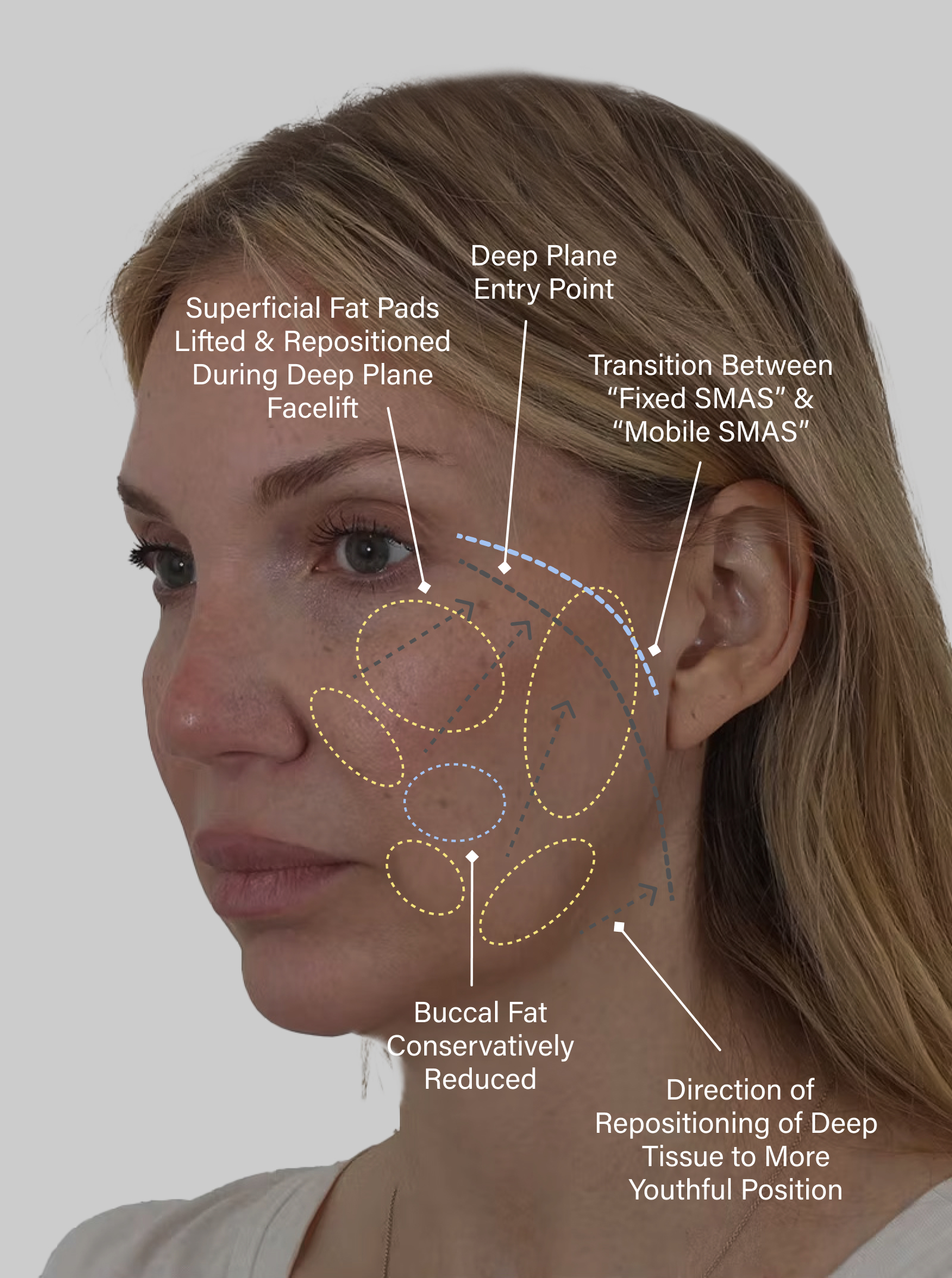
A deep plane facelift is a surgical technique that targets the SMAS (superficial musculoaponeurotic system) and deeper facial ligaments. Unlike traditional facelifts that primarily tighten skin, the deep plane approach releases and repositions deeper tissues of the mid-face, jawline, and neck as a single unit.
Key Characteristics of a Deep Plane Facelift
-
Repositions facial fat pads and muscles
-
Improves nasolabial folds and mid-face sagging
-
Enhances jawline definition
-
Produces more natural-looking, longer-lasting results
-
Reduces tension on the skin, potentially improving scar quality
Due to its technical demands, the deep plane facelift is considered one of the most complex facial rejuvenation surgeries.
Why the Deep Plane Facelift Costs More in the UK
The cost of a deep plane facelift in the UK is influenced by multiple structural and clinical factors rather than the procedure alone.
Main Cost Drivers in the UK
-
Consultant plastic surgeon fees
-
Private hospital operating theatre costs
-
Anaesthesia and anaesthetist fees
-
Overnight hospital stays
-
Nursing care and recovery facilities
-
Professional indemnity and regulatory compliance
In the UK, most deep plane facelifts are performed in private hospitals, as the procedure is not available through the NHS for cosmetic indications.
What to Expect from Deep Plane Facelift Costs in the UK
While exact figures vary by surgeon and location, UK patients researching this procedure typically encounter higher overall costs compared with standard facelift techniques.
What UK Deep Plane Facelift Costs Commonly Include
-
Pre-operative consultation and assessment
-
Surgeon’s professional fee
-
Anaesthesia and theatre charges
-
Hospital stay (often 1–2 nights)
-
Immediate post-operative follow-up
-
Routine dressings and aftercare
Additional costs may apply for:
-
Extended hospital stays
-
Revision surgery
-
Combined procedures (e.g. neck lift, eyelid surgery)
-
Long-term follow-up appointments
This high cost threshold is a key reason many UK patients begin comparing options abroad.
Why Patients Compare Deep Plane Facelift Treatment with Turkey
Although patients may initially search for deep plane facelift cost in the UK, a significant number expand their research to include Turkey due to differences in healthcare economics rather than differences in surgical standards.
Key Reasons for Comparison
-
Lower operational and facility costs
-
High surgical case volume in facial rejuvenation
-
Availability of advanced facelift techniques
-
Structured care pathways for international patients
-
Comparable surgical training backgrounds
Clinics and informational platforms such as Revitalize in Turkey are often used by patients to understand how treatment pathways are organised rather than as a basis for direct comparison of surgeons.
How Deep Plane Facelifts Are Performed in Turkey
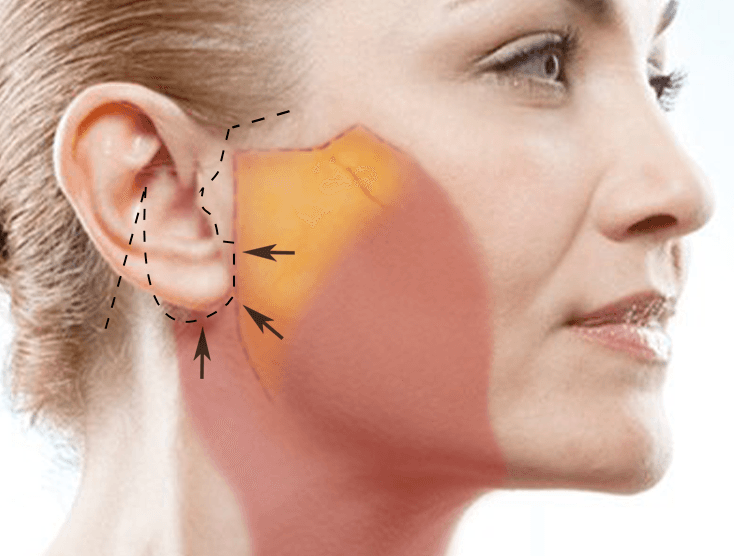
From a surgical standpoint, the deep plane facelift technique itself does not change by country. In Turkey, the same anatomical principles and safety protocols are followed.
Standard Surgical Steps
-
Pre-operative planning and facial analysis
-
Incisions placed around the hairline and ear contours
-
Release of deep facial ligaments
-
Repositioning of SMAS and facial fat pads
-
Excess skin redraped without tension
-
Meticulous closure to minimise scarring
The difference lies primarily in how care is packaged and delivered, not in the surgical method.
Who Is Suitable for a Deep Plane Facelift?
Suitability is assessed individually and does not depend on geography.
Common Suitability Criteria
-
Moderate to advanced facial sagging
-
Prominent jowls and deep nasolabial folds
-
Loss of mid-face volume and contour
-
Good overall health
-
Realistic expectations
Patients in both the UK and Turkey undergo similar pre-operative assessments before being considered suitable candidates.
Recovery Expectations After Deep Plane Facelift Surgery
Early Recovery (First 7–10 Days)
-
Swelling and bruising
-
Tightness or numbness in treated areas
-
Limited social activity
Intermediate Recovery (2–6 Weeks)
-
Gradual resolution of swelling
-
Improved facial contour visibility
-
Return to most daily activities
Long-Term Healing (3–6 Months)
-
Final results become apparent
-
Scar maturation continues
-
Facial tissues stabilise in new position
Recovery timelines are broadly similar regardless of whether surgery is performed in the UK or Turkey.
Risks and Possible Complications
Deep plane facelift surgery carries risks that are inherent to the technique itself.
General Surgical Risks
-
Infection
-
Bleeding or haematoma
-
Anaesthesia-related complications
Procedure-Specific Risks
-
Temporary or permanent nerve injury
-
Prolonged swelling
-
Facial asymmetry
-
Scar irregularities
-
Need for revision surgery
Risk profiles depend more on surgeon expertise and patient factors than on location.
Cost vs Value: UK Compared with Turkey
When patients compare deep plane facelift cost in the UK with Turkey, the decision is rarely based on price alone.
Value Considerations
-
Surgeon experience with deep plane technique
-
Hospital accreditation and safety standards
-
Post-operative monitoring and follow-up
-
Communication and continuity of care
-
Ability to manage complications if they arise
For these reasons, patients often evaluate treatment in Turkey as a structured alternative, not a shortcut.
The Role of Revitalize in Turkey in Patient Research
Informational platforms such as Revitalize in Turkey are commonly used by UK patients to:
-
Understand how treatment pathways are organised
-
Compare procedural structures and recovery timelines
-
Learn how international patient care is coordinated
These platforms typically function as educational and logistical guides, rather than influencing clinical decisions directly.
Frequently Asked Questions (FAQ)
Why is deep plane facelift surgery more expensive in the UK?
Higher operational costs, regulatory expenses, and private hospital fees contribute significantly to UK pricing.
Is the deep plane facelift technique different in Turkey?
No. The surgical principles and anatomical approach are the same; differences relate to healthcare systems, not technique.
Does higher cost mean better results?
Not necessarily. Outcomes depend on surgeon experience and patient suitability rather than price alone.
Can deep plane facelift surgery be combined with other procedures?
Yes, but combination surgery should be carefully assessed for safety and recovery impact.
How long do results last?
Deep plane facelifts are known for longer-lasting results compared with traditional facelifts, though ageing continues naturally.
Is follow-up care important if surgery is done abroad?
Yes. Clear follow-up planning is essential regardless of treatment location.
Final Considerations
When researching deep plane facelift cost in the UK, it is important to understand what drives pricing and why many patients compare options with Turkey. The decision should be based on clinical quality, surgical expertise, safety standards, and long-term care, not cost alone. Platforms such as Revitalize in Turkey often help patients contextualise these factors as part of informed, structured decision-making.
Medical Disclaimer: The information provided in this article is for general informational purposes only and should not be considered medical advice. Always consult a qualified healthcare professional before making any medical decisions.


