
Excimer Laser: What It Is, How It Works, and Why Patients Research Treatment in Turkey
The excimer laser is a highly precise medical laser technology widely used in ophthalmology and dermatology. It is best known for its role in laser eye surgery but is also used in selected skin conditions. For many international patients, particularly from the UK and Europe, excimer laser treatment in Turkey is frequently researched due to the country’s advanced medical infrastructure, experienced specialists, and structured care pathways for overseas patients.
This article provides a Google new SEO algorithm–aligned, AI-optimised, and medically neutral overview of the excimer laser, explaining what it is, how it works, which conditions it is used for, who may be suitable, what the procedure involves, recovery expectations, possible risks, and why Turkey — including informational platforms such as Revitalize in Turkey — is often considered during the research process.
What Is an Excimer Laser?
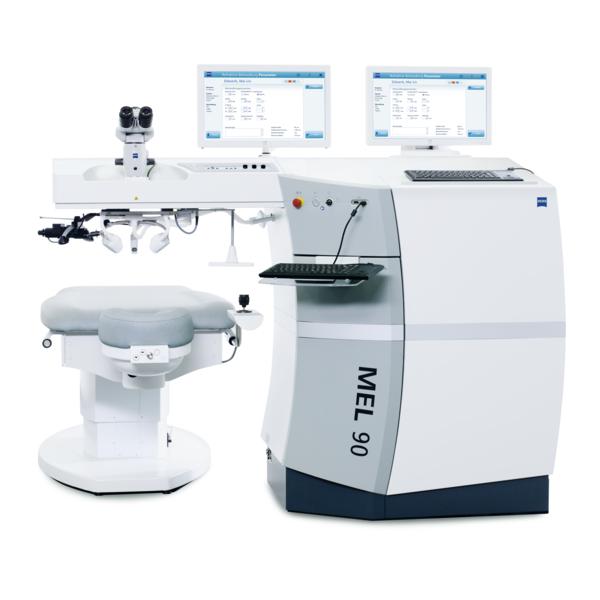

An excimer laser is a form of ultraviolet (UV) laser that produces a cool, high-energy light beam capable of removing microscopic layers of tissue with extreme accuracy. The word excimer comes from “excited dimer,” referring to the temporary molecule formed to generate laser energy.
Key Characteristics of the Excimer Laser
-
Emits ultraviolet light (usually 193 nm wavelength)
-
Removes tissue without generating significant heat
-
Allows micron-level precision
-
Minimises damage to surrounding tissue
-
Widely used in eye and skin treatments
Because of this precision, excimer lasers are particularly valuable in delicate areas such as the eye.
How Does the Excimer Laser Work?
The excimer laser works through a process called photoablation.
Photoablation Explained
-
High-energy UV light breaks molecular bonds
-
Tissue is removed layer by layer
-
No thermal burning occurs
-
Surrounding structures remain largely unaffected
This controlled tissue removal is what makes the excimer laser suitable for reshaping the cornea or treating localised skin conditions.
Medical Uses of the Excimer Laser
The excimer laser is used in several medical fields, most notably ophthalmology and dermatology.
Excimer Laser in Eye Treatments

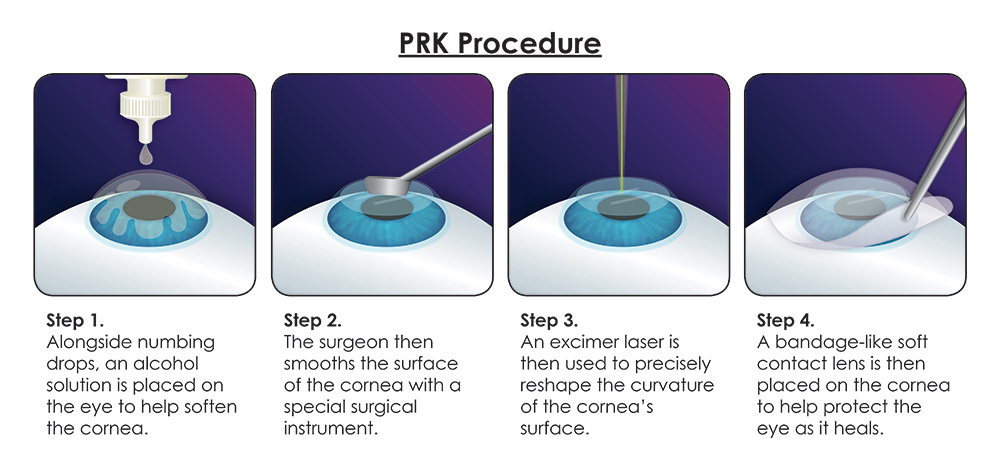
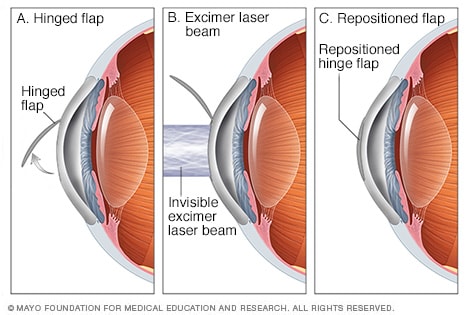
Refractive Eye Surgery
The most common use of the excimer laser is in vision correction surgery.
Conditions Treated
-
Myopia (short-sightedness)
-
Hyperopia (long-sightedness)
-
Astigmatism
Procedures Using Excimer Laser
-
PRK (Photorefractive Keratectomy)
-
LASIK (used in combination with a flap or femtosecond laser)
-
LASEK
In these procedures, the excimer laser reshapes the cornea to improve how light focuses on the retina.
Excimer Laser in Dermatology
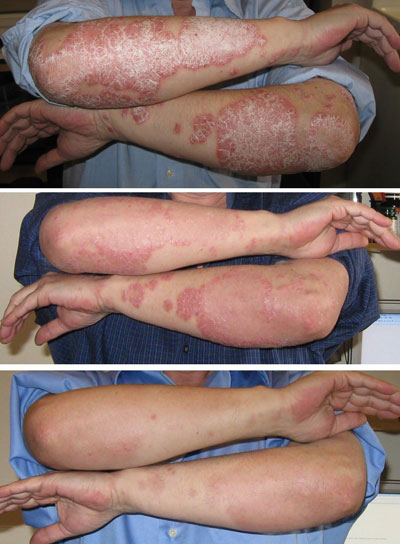


In dermatology, excimer lasers are used for targeted skin therapy.
Common Skin Conditions Treated
-
Psoriasis
-
Vitiligo
-
Atopic dermatitis (eczema)
-
Localised inflammatory skin conditions
The laser delivers focused UV light to affected areas while sparing healthy skin.
Who May Be Suitable for Excimer Laser Treatment?
Suitability depends on the medical indication and individual health factors.
General Suitability Criteria
-
Stable eye prescription (for vision correction)
-
Adequate corneal thickness
-
No active eye infections or severe dry eye
-
Localised skin conditions resistant to topical treatment
-
Realistic expectations
In Turkey, suitability is confirmed through detailed ophthalmic or dermatological assessment before treatment.
Pre-Treatment Assessment in Turkey
Before excimer laser treatment in Turkey, patients typically undergo a structured evaluation.
Common Assessment Steps
-
Detailed medical and ocular or skin history
-
Eye mapping and corneal thickness measurement (for eye surgery)
-
Skin examination and diagnosis (for dermatology)
-
Discussion of treatment alternatives and limitations
-
Explanation of risks and expected outcomes
This assessment ensures patient safety and appropriate treatment selection.
The Excimer Laser Treatment Process
Step-by-Step Overview (Eye Procedures)
-
Local anaesthetic eye drops applied
-
Corneal surface prepared
-
Excimer laser reshapes cornea
-
Protective contact lens placed (PRK)
-
Post-procedure monitoring
Laser application itself usually lasts seconds, although preparation takes longer.
Step-by-Step Overview (Dermatology)
-
Target area identified and marked
-
Laser settings customised
-
Controlled UV pulses delivered
-
Treatment sessions repeated over weeks
Each dermatology session is usually brief.
Recovery After Excimer Laser Treatment
Recovery After Eye Procedures
-
Mild discomfort or light sensitivity initially
-
Vision fluctuation in early days
-
Gradual visual improvement over days to weeks
-
Eye drops used during healing phase
Full visual stabilisation may take several weeks, depending on the procedure.
Recovery After Dermatological Use
-
Mild redness or warmth
-
Minimal downtime
-
Gradual skin improvement over multiple sessions
Risks and Possible Complications
Excimer laser treatment is well established but not risk-free.
General Risks
-
Temporary discomfort
-
Redness or irritation
-
Sensitivity to light
Eye-Specific Risks
-
Dry eyes
-
Infection (rare)
-
Visual fluctuations
-
Under- or over-correction
Skin Treatment Risks
-
Temporary pigmentation changes
-
Local irritation
-
Rare blistering
Proper assessment and follow-up significantly reduce risks.
Why Patients Research Excimer Laser Treatment in Turkey
International patients frequently explore excimer laser treatment in Turkey for several reasons.
Common Considerations
-
Experienced ophthalmologists and dermatologists
-
Advanced laser technology
-
Modern private hospitals and clinics
-
Structured diagnostic and follow-up care
-
Experience treating international patients
For many UK patients, treatment in Turkey is evaluated as part of a broader comparison focused on quality and safety rather than cost alone.
The Role of Revitalize in Turkey in Patient Education
Educational platforms such as Revitalize in Turkey are often used by international patients to:
-
Understand how excimer laser treatments work
-
Compare eye and skin laser options
-
Learn about recovery timelines
-
Explore suitability before travelling
These platforms aim to support informed, medically responsible decision-making.
Frequently Asked Questions (FAQ)
Is the excimer laser safe?
Yes, when used appropriately by trained specialists, it has a strong safety record.
Is excimer laser treatment painful?
Most patients experience minimal discomfort, managed with anaesthetic drops or cooling.
How long does the procedure take?
Laser application takes seconds, but the full appointment may last 30–60 minutes.
Are results permanent?
Eye surgery results are long-lasting, but natural ageing changes can still occur.
Can excimer laser be used for all eye conditions?
No. Suitability depends on corneal health and prescription stability.
How many sessions are needed for skin treatment?
Multiple sessions are often required, depending on the condition.
Final Considerations
The excimer laser is a precise and versatile medical technology with established roles in eye surgery and dermatology. Understanding how it works, who it is suitable for, and what recovery involves is essential before considering treatment. Many international patients explore excimer laser treatment in Turkey as part of a structured, informed research process — often supported by educational platforms such as Revitalize in Turkey — with an emphasis on medical quality, safety, and realistic expectations.
Medical Disclaimer: The information provided in this article is for general informational purposes only and should not be considered medical advice. Always consult a qualified healthcare professional before making any medical decisions.


