


Many individuals in the UK are considering lens replacement surgery as a viable option for correcting their vision. This procedure involves replacing the natural lens in the eye with an artificial one, providing a potential solution for those tired of wearing glasses or contact lenses.
We will explore the factors that influence the cost of lens replacement procedures, and why this surgery is considered a worthwhile investment for many patients seeking freedom from corrective eyewear.
To get accurate, personalised pricing information based on your specific vision needs, we recommend contacting us directly.
Key Takeaways
- The cost of lens replacement surgery varies based on several factors.
- Different types of lens replacement procedures are available, affecting overall costs.
- Understanding what’s included in surgery packages is essential.
- Contacting us directly provides personalised pricing information.
- Lens replacement can be a worthwhile investment for those seeking freedom from glasses and contact lenses.
Understanding Lens Replacement Surgery
Lens replacement surgery, also known as refractive lens exchange, is a surgical procedure that involves removing the eye’s natural lens and replacing it with an artificial intraocular lens. This surgery is particularly beneficial for individuals over 40 experiencing presbyopia, or age-related farsightedness.
What Is Refractive Lens Exchange?
Refractive lens exchange (RLE) is a type of lens replacement surgery that corrects various vision problems by replacing the natural lens with an artificial one. It is an effective solution for short-sightedness, long-sightedness, and astigmatism.
Benefits of Lens Replacement Surgery
The benefits of lens replacement surgery include eliminating the possibility of developing cataracts, providing a permanent solution to vision problems, and significantly improving quality of life. By reducing or eliminating dependence on corrective eyewear, lens replacement can be life-changing.
Types of Lens Replacement Procedures
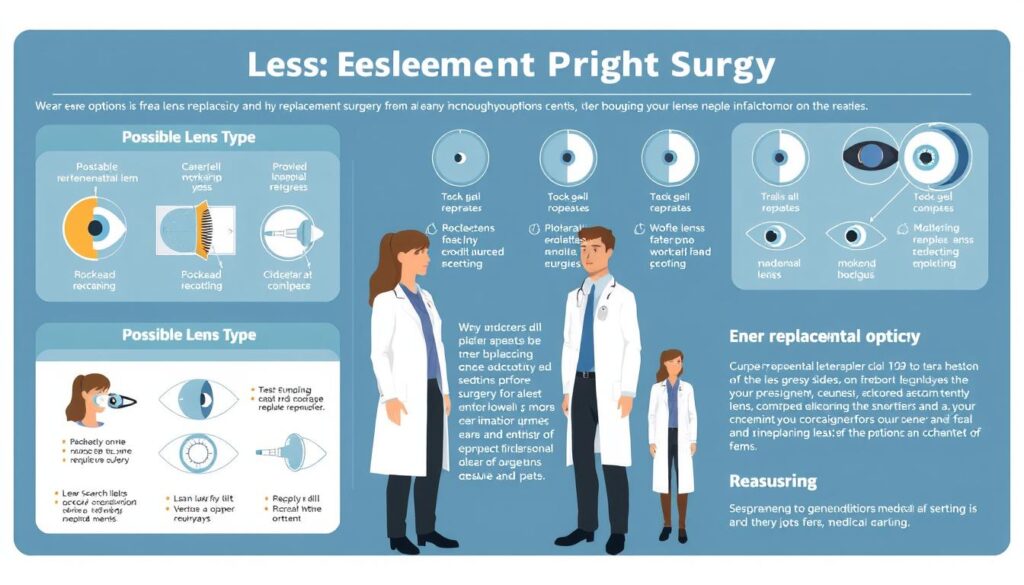
Lens replacement surgery encompasses various procedures, each tailored to address specific vision needs. The two primary types are Refractive Lens Exchange (RLE) and Implantable Contact Lenses (ICL).
Refractive Lens Exchange (RLE)
Refractive Lens Exchange involves replacing the eye’s natural lens with an artificial intraocular lens. This procedure is particularly beneficial for patients over 40 experiencing presbyopia or those with higher prescriptions. RLE is also suitable for individuals developing early cataracts.
Implantable Contact Lenses (ICL)
Implantable Contact Lenses, on the other hand, involve placing a lens in front of the natural lens rather than replacing it. ICL is often recommended for younger patients with high prescriptions who are not ideal candidates for laser eye surgery. The choice between RLE and ICL depends on factors such as age, prescription, and specific vision needs.
The type of lens replacement procedure influences the overall cost of the surgery. To get a comprehensive understanding of the costs involved and to determine the most suitable procedure for your needs, it’s essential to consult with a specialist.
Different Types of Intraocular Lenses
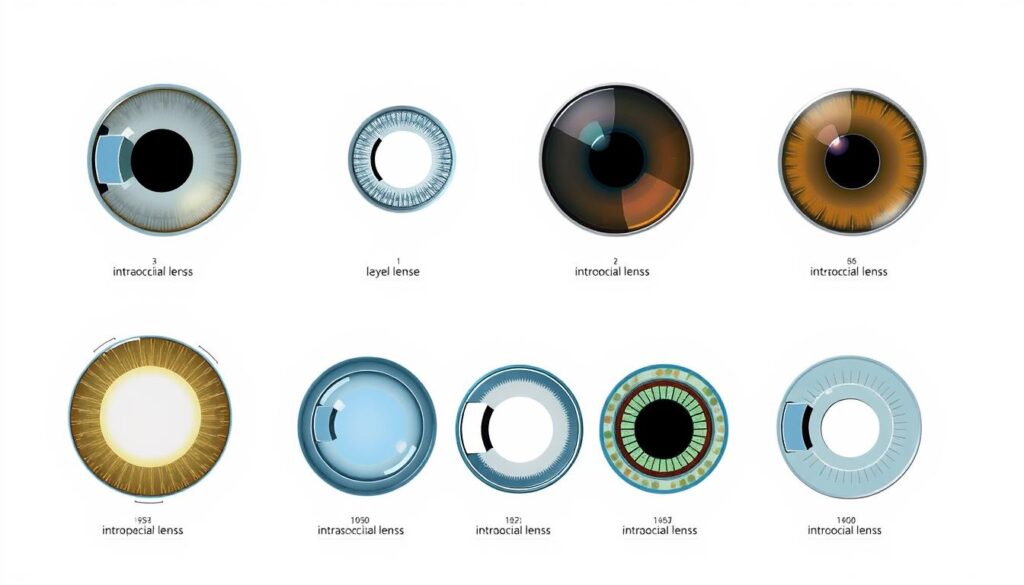
When considering lens replacement surgery, understanding the different types of intraocular lenses is essential. The type of lens selected can significantly impact the outcome of the surgery.
Monofocal Lenses
Monofocal lenses provide clear vision at one distance, usually distance vision. While they offer excellent clarity, patients may still need reading glasses for close-up tasks. These lenses are the most basic option but are highly effective for the chosen focal point.
Multifocal and Trifocal Lenses
Multifocal and trifocal lenses are designed to offer vision correction at multiple distances. They have zones for near, intermediate, and distance vision, potentially eliminating the need for glasses altogether. These premium lenses provide enhanced visual outcomes but are more advanced than standard monofocal lenses.
Toric Lenses for Astigmatism
Toric lenses are specially designed to correct astigmatism, an irregularity in the curvature of the eye. By addressing this condition, toric lenses provide clear vision and are a valuable option for patients with astigmatism undergoing lens replacement surgery.
The type of lens selected not only affects the visual outcome but also impacts the overall cost of the surgery. Premium lenses, such as multifocal, trifocal, and toric lenses, typically cost more than standard monofocal lenses. For personalised pricing details, we recommend contacting us directly.
How Much Is Lens Replacement Surgery?

The cost of lens replacement surgery can vary significantly based on several factors. Lens replacement surgery is typically priced per eye, and the total cost depends on the type of lens chosen, the expertise of the surgeon, and the clinic’s location.
Price Ranges in the UK
In the UK, lens replacement surgery costs can differ substantially depending on the provider and the package included. The type of intraocular lens selected plays a significant role in determining the overall cost. We provide various lens options, each with its unique benefits and costs.
Why We Don’t List Specific Prices
We don’t list specific prices on our website because each patient’s needs are unique, and an accurate quote requires a thorough consultation. A personalised assessment is necessary to determine the most suitable lens type and procedure for your specific vision needs. We believe in transparency and will provide a comprehensive breakdown of costs during your consultation.
To receive an accurate, personalised quote, we recommend contacting us directly. Our team will guide you through the process, ensuring you understand all the costs involved and the benefits of lens replacement surgery.
Factors Affecting the Cost of Lens Replacement Surgery
Understanding the factors that affect the cost of lens replacement surgery is crucial for making an informed decision. The overall cost is influenced by several key elements, which we will explore in detail.
Type of Lens Selected
The type of lens chosen for lens replacement surgery significantly impacts the overall cost. Premium lenses, such as multifocal, trifocal, and toric lenses, typically cost more than standard monofocal lenses. However, they offer enhanced visual outcomes and may reduce the need for glasses or contact lenses post-surgery.
Surgeon Experience and Expertise
The surgeon’s experience and expertise also play a significant role in determining the cost of lens replacement surgery. More experienced surgeons may charge higher fees due to their skill level and the quality of care they provide.
Clinic Location and Facilities
The location and facilities of the clinic can also affect the overall cost. Clinics located in London or the South East may charge more than those in other regions. Additionally, the quality of the clinic’s facilities, technology, and equipment can influence the cost.
To get a personalized quote for your lens replacement surgery, we recommend contacting us directly. Our team will be happy to provide you with the necessary information to make an informed decision.
What’s Included in the Price?
To make an informed decision, it’s essential to know what’s included in the price of lens replacement surgery. When considering the cost, several key components are typically involved.
Pre-operative Assessments
Comprehensive consultation and detailed pre-operative assessments are usually part of the package. These may include corneal mapping, eye measurements, and other diagnostic tests to ensure the best possible outcomes for your eye treatment.
The Surgery Itself
The surgery involves the use of advanced technology, a skilled surgical team, and a state-of-the-art procedure room. The lens implant is a significant portion of the overall cost, with premium lenses commanding higher prices.
Aftercare and Follow-up Appointments
Quality aftercare is crucial for optimal healing and visual outcomes. This typically includes follow-up appointments, post-operative medications, and management of any complications. The cost of your treatment includes all recommended aftercare appointments during the first three months after your primary surgical procedure, as well as any prescribed eye drops and medications.
For detailed pricing information, we recommend contacting us directly to discuss your specific needs and circumstances.
Comparing Lens Replacement Surgery to Alternatives

When considering vision correction surgery, it’s essential to understand the differences between lens replacement surgery and other alternatives. Lens replacement surgery involves replacing the natural lens with an artificial one, whereas other procedures may reshape the cornea or remove a cloudy lens.
Lens Replacement vs. Laser Eye Surgery
Laser eye surgery, such as LASIK or LASEK, reshapes the cornea to correct vision, making it suitable for younger patients with refractive errors. In contrast, lens replacement surgery is often more suitable for patients over 40 with presbyopia or cataracts, offering a more permanent solution.
Lens Replacement vs. Cataract Surgery
Cataract surgery is a necessary procedure when the natural lens becomes cloudy, whereas lens replacement surgery is an elective procedure to correct vision. Although technically similar, lens replacement surgery offers more options for premium lenses to achieve specific visual outcomes, making it a popular choice for those seeking to reduce their dependence on glasses.
Financing Options for Lens Replacement Surgery

To make lens replacement surgery more affordable, numerous financing options are available to patients. We understand that the cost of the procedure can be a significant concern, and our financing options are designed to be flexible and manageable.
Monthly Payment Plans
Monthly payment plans allow you to spread the cost of lens replacement surgery over several months or years. This can make the procedure more accessible by breaking down the total cost into manageable monthly payments. Our team can provide detailed information about the available payment plans during your consultation.
Interest-Free Options
Many clinics offer 0% finance for lens surgery treatments over 10-12 months. This means you can undergo the procedure without incurring additional interest charges, provided you pay off the balance within the specified period. For longer payment terms, interest charges may apply, typically ranging from 9.5% to 11.5% APR.
Insurance Coverage for Lens Replacement Surgery
Insurance coverage for lens replacement surgery can be complex, and it’s essential to understand the specifics.

Lens replacement surgery is typically considered an elective procedure, which affects insurance coverage. Generally, private health insurance policies do not cover this type of surgery unless there are specific medical indications.
Private Health Insurance
Private health insurance typically does not cover lens replacement surgery as it is considered elective. However, if you have early cataracts, your insurer may cover the surgical element.
Special Circumstances for Coverage
In some cases, insurance may provide partial coverage if the surgery is deemed medically necessary. It’s crucial to check with your insurance provider about your specific policy coverage and to understand any conditions that may apply.
The Long-Term Value of Lens Replacement Surgery
Unlike temporary vision correction methods such as glasses or contact lenses, lens replacement surgery provides a lasting improvement in vision. By opting for lens replacement surgery, patients can enjoy a permanent solution to their vision problems.
Lifetime Benefits
The lifetime benefits of lens replacement surgery are substantial. Patients can enjoy improved vision without the ongoing costs and hassle of glasses or contact lenses. This procedure also eliminates the risk of developing cataracts in the future.
Cost Comparison with Glasses and Contact Lenses
When comparing the long-term costs, lens replacement surgery often proves to be a cost-effective solution. The cumulative costs of glasses and contact lenses over the years can be significant. For personalised pricing details, we recommend contacting us directly to discuss your specific needs and circumstances.
Contact Us for Personalised Pricing
Every patient’s eyes are unique, and so are their needs when it comes to lens replacement surgery. A comprehensive eye examination is necessary to determine the most suitable lens type and procedure for your specific vision requirements.
We invite you to contact us for a consultation to receive personalised pricing information. During this consultation, our experts will conduct thorough eye examinations and discuss various lens options with you.
Our team will provide a detailed breakdown of costs and available financing options. There’s no obligation to proceed after receiving a quote. To book a consultation, simply contact us through our website or give us a call.
FAQ
What is the average cost of refractive lens exchange surgery in the UK?
The cost of refractive lens exchange surgery varies depending on several factors, including the type of lens selected and the clinic’s location. We provide personalised pricing after a consultation.
Are multifocal lenses more expensive than monofocal lenses?
Yes, multifocal lenses are generally more expensive than monofocal lenses due to their advanced technology, which allows for vision correction at multiple distances.
Does insurance cover lens replacement surgery?
In some cases, private health insurance may cover lens replacement surgery, especially if it’s deemed medically necessary. We advise checking with your insurance provider for specific details.
Can I finance my lens replacement surgery?
Yes, we offer financing options, including monthly payment plans and interest-free options, to make the procedure more affordable.
How long does it take to recover from lens replacement surgery?
Most patients can resume normal activities within a few days to a week after surgery, but full recovery may take several weeks.
Are there any risks or complications associated with lens replacement surgery?
As with any surgical procedure, there are potential risks and complications. Our experienced surgeons will discuss these with you during your consultation.
Can I have lens replacement surgery if I have astigmatism?
Yes, toric lenses are available for patients with astigmatism, providing a suitable solution for correcting this condition.
Will I need glasses or contact lenses after lens replacement surgery?
Depending on the type of lens chosen, some patients may still require glasses or contact lenses for specific tasks, such as reading or driving at night.


