
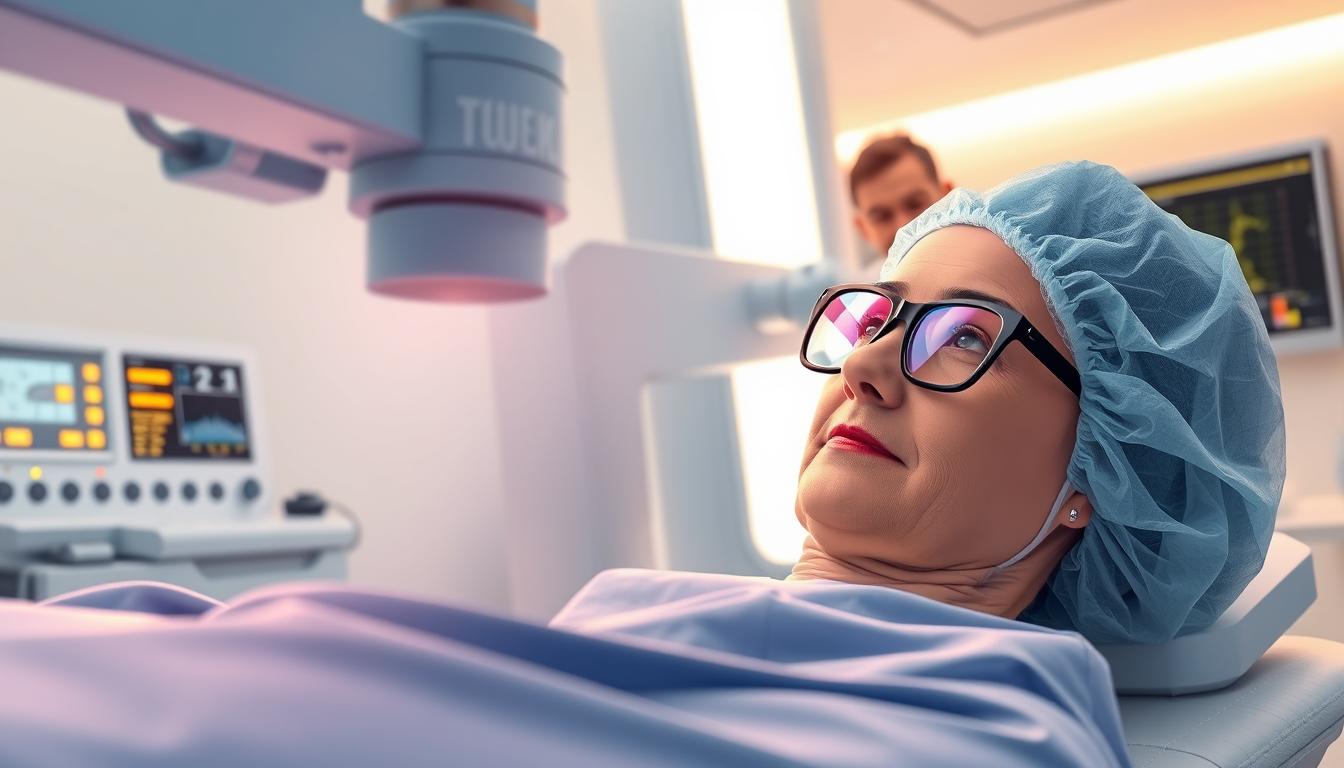
We use advanced technology to subtly reshape the cornea, transforming your vision and giving you the joy of clearer and sharper sight. With laser eye surgery, millions of people worldwide have achieved remarkable results, reducing or eliminating their dependence on glasses and contact lenses.
Our data indicates that out of 57,346 consultations, 85.2% of patients were found suitable for a refractive procedure. Moreover, 99.2% of patients with common prescriptions achieved 20|20 vision or better following treatment. This highlights the high success rate of modern laser surgery.
To learn more about how laser eye surgery can correct common vision problems and to determine if you’re a suitable candidate, we encourage you to contact us directly for personalised advice.
Key Takeaways
- Laser eye surgery can significantly reduce or eliminate dependence on glasses and contact lenses.
- Advanced laser technology is used to reshape the cornea and correct common vision problems.
- The procedure has a high success rate, with 99.2% of patients achieving 20|20 vision or better.
- 85.2% of patients who attended consultations were found suitable for a refractive procedure.
- Personalised advice is available by contacting us directly to discuss your specific situation.
Understanding Laser Eye Surgery
With advancements in technology, laser eye surgery has emerged as a safe and effective treatment for vision correction. We use technologically-advanced lasers to subtly reshape your cornea, transforming your vision and giving you the joy of clearer and sharper sight.
How Laser Eye Surgery Works
Laser eye surgery works by reshaping the cornea to correct refractive errors that cause vision problems. Different laser technologies are used to precisely remove microscopic amounts of corneal tissue, allowing light to focus correctly on the retina for clearer vision. This process is virtually painless and has a high success rate.
Who Is a Suitable Candidate
Suitability for laser eye surgery is determined on an individual basis during a comprehensive consultation. Typically, candidates should be over 18, have a stable prescription for at least 12 months, and have a minimum corneal thickness. Certain conditions like pregnancy, autoimmune disorders, and severe dry eye syndrome may affect eligibility. Approximately 85% of people are found suitable for some form of laser eye surgery.
The Life-Changing Benefits of Laser Eye Surgery

For many, laser eye surgery is a life-changing procedure that brings about numerous benefits. By correcting vision problems, individuals can experience a significant improvement in their quality of life.
Freedom from Glasses and Contact Lenses
One of the most significant advantages of laser eye surgery is the freedom from glasses and contact lenses. Daily activities such as swimming, sports, and even waking up with clear vision become much easier without the hassle of visual aids.
Improved Vision Quality
Laser eye surgery can provide vision quality beyond what glasses or contact lenses offer. In a study of 190,231 patients, 99.2% achieved 20/20 vision or better following treatment, highlighting the effectiveness of the procedure.
Long-Term Cost Benefits
While the initial investment in laser eye surgery may seem significant, it’s essential to consider the long-term cost benefits. By eliminating the need for glasses, contact lenses, and associated care products, individuals can save money over time. For personalized pricing information, we encourage you to to discuss your individual needs and prescription.
Types of Laser Eye Surgery
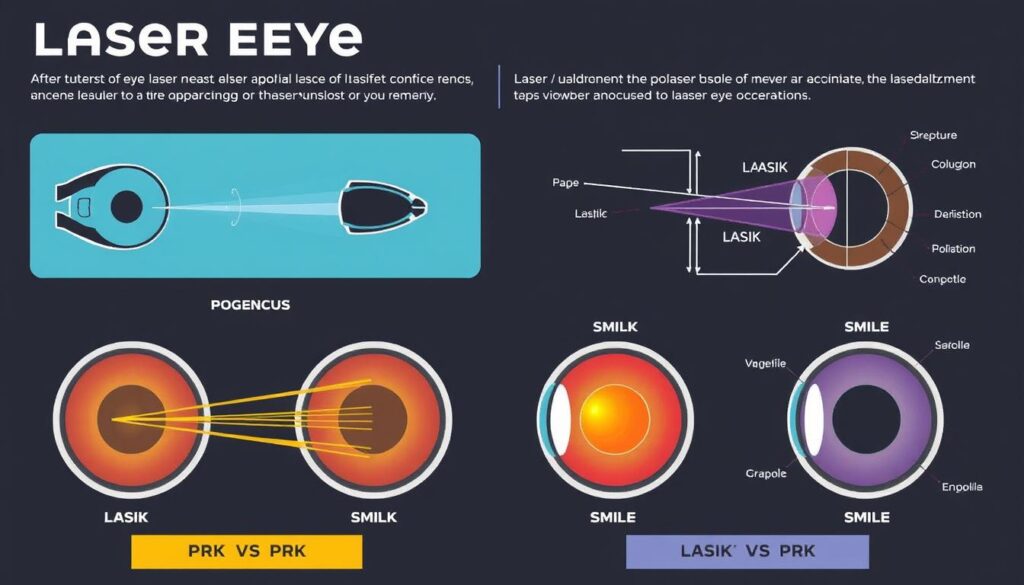
Laser eye surgery encompasses a range of procedures, including LASIK, LASEK, and advanced technologies like iDesign, designed to correct vision effectively. Understanding the differences between these procedures is essential for determining the most suitable treatment for your specific needs.
LASIK Surgery
LASIK (Laser-Assisted In Situ Keratomileusis) is one of the most popular laser eye surgery procedures. It involves creating a thin flap in the cornea, which is gently lifted to allow reshaping of the underlying tissue with a laser. The benefits of LASIK include a quick recovery time, often within 24-48 hours, and minimal discomfort, making it suitable for many patients with common refractive errors.
LASEK/PRK Surgery
LASEK (Laser-Assisted Epithelial Keratomileusis) or PRK (Photorefractive Keratectomy) is an alternative laser eye surgery procedure that involves removing the outer layer of the cornea before reshaping. This method is often recommended for patients with thinner corneas who are not suitable for LASIK. While the recovery time may be longer compared to LASIK, LASEK/PRK can offer potentially better outcomes for certain eye conditions.
Advanced iDesign Technology
The advanced iDesign technology enhances both LASIK and LASEK/PRK procedures by taking over 1,200 measurements to create a personalised 3D map of each eye. This results in treatment that is 25 times more accurate than glasses or contact lenses. By tailoring the treatment to the individual’s unique eye characteristics, iDesign technology significantly improves the precision and effectiveness of laser eye surgery.
To determine the most appropriate procedure for your unique vision needs, a thorough consultation is essential. We recommend contacting us to discuss your options and receive personalised advice on the best course of treatment.
The Laser Eye Surgery Procedure Explained

Embarking on laser eye surgery requires a comprehensive understanding of the process. The journey to clearer vision involves several key steps, from initial consultation to the procedure itself.
Before the Procedure: Consultation and Assessment
Before undergoing laser eye surgery, a comprehensive consultation and assessment are conducted. This involves various eye measurements and scans to determine suitability and create a personalised treatment plan. Discussing medical history, current eye health, and expectations during the consultation is crucial to ensure the best possible outcomes.
During the Procedure: What to Expect
During the laser eye surgery procedure, the eye is numbed with anaesthetic drops to minimise discomfort. The laser is then applied to reshape the cornea, a process that typically takes 15-30 minutes for both eyes. Our surgical team ensures optimal results and patient comfort throughout the procedure.
Advanced Technology Used
We utilise technologically-advanced lasers, including wavefront-guided systems and femtosecond lasers, to subtly reshape the cornea. The innovative iDesign system produces a highly detailed 3D map of the eye, greatly enhancing the treatment. For pricing details, please to discuss your options.
Recovery After Laser Eye Surgery

After undergoing laser eye surgery, patients often wonder what to expect during the recovery period. The recovery process is a crucial phase that determines the outcome of the surgery. Here, we outline what you can expect immediately after the surgery, during the first week, and in the long term.
Immediate Post-Surgery Experience
It is common for the eyes to be red, watery, feel scratchy, and be very light sensitive for 4-6 hours following treatment. You may experience mild discomfort for the first 24 hours after treatment. Resting and following the post-surgery instructions provided by your practitioner can help alleviate these symptoms.
First Week Recovery Timeline
Recovery of vision to a reasonable level is almost immediate, and typically, most patients notice a significant improvement in their vision the next day. During the first week, it’s essential to follow the prescribed medication regimen, including using eye drops as directed, to facilitate healing and minimize discomfort.
Long-Term Healing Process
During the first few months after treatment, your vision may fluctuate. It may take up to 3-6 months for your vision to stabilise after treatment as the eyes fully adapt to their new shape. Attending follow-up appointments is crucial to monitor the healing process and address any concerns.
For more information on laser eye surgery and to discuss your specific needs, please don’t hesitate to get in touch with us.
Potential Side Effects and How We Address Them

Understanding the potential side effects of laser eye surgery can help you make an informed decision. While we strive to provide the best possible outcomes, it’s essential to be aware of the potential risks and complications.
Common Temporary Side Effects
Some common temporary side effects of laser eye surgery include dry eyes, light sensitivity, glare, halos around lights, and slightly blurred or fluctuating vision during the healing period. These effects are normal parts of the healing process and typically resolve within days to weeks.
Managing Dry Eyes and Discomfort
Dry eye is one of the most common post-surgery experiences, affecting most patients to some degree for up to six months. We provide practical management strategies for dry eyes, including the proper use of prescribed artificial tears, environmental modifications, and adequate hydration. If symptoms persist, we are here to help.
Our comprehensive approach to addressing side effects includes detailed pre-surgery discussions about what to expect, personalized aftercare plans, and regular follow-up appointments to monitor healing. We emphasize that serious complications are rare with modern laser eye surgery techniques, but we are fully equipped to address any concerns that arise during the recovery period.
For more information on laser eye surgery and to discuss your individual needs, please don’t hesitate to contact us for a consultation.
Comparing LASIK and LASEK Recovery Experiences
LASIK and LASEK surgeries have distinct recovery profiles that patients should be aware of when deciding which procedure is best for them.
We outline below the typical recovery timelines for both procedures to help set realistic expectations.
LASIK Recovery Timeline
Recovery from LASIK surgery is generally rapid. Most patients experience significant visual improvement within 24 hours, with minimal discomfort that can be managed using lubricating eye drops. The corneal flap created during LASIK protects the treated area, promoting faster healing and reducing post-operative discomfort. Typically, patients can return to work within 1-3 days.
- Rapid visual recovery
- Minimal post-operative discomfort
- Quick return to normal activities
LASEK Recovery Timeline
In contrast, LASEK recovery involves a longer period of healing. Patients may experience moderate to significant discomfort for the first 24-48 hours as the surface cells regenerate. A protective bandage contact lens is worn for 3-4 days. Vision typically stabilises within 3-6 days, allowing most patients to return to work. However, complete visual stability may take up to two weeks or, in some cases, longer.
- Longer healing period
- More pronounced initial discomfort
- Variable time to achieve full visual stability
While LASEK may have a longer recovery period, it’s often recommended for patients with thin corneas or certain occupations. Both LASIK and LASEK offer comparable long-term visual outcomes. Following the specific aftercare instructions provided by your surgeon is crucial for a smooth and comfortable recovery, regardless of the procedure chosen. For more information on LASIK and LASEK, including pricing details, please contact us to discuss your options.
Aftercare and Follow-Up Support

Our commitment to your vision extends far beyond the laser eye surgery procedure itself. We understand that successful outcomes depend not just on the surgery, but on proper aftercare and follow-up support.
Post-Surgery Appointment Schedule
After laser eye surgery, we’ll want to see you the day after your procedure to assess initial healing. Follow-up appointments are scheduled at approximately 1 week, 1 month, 3 months, and 6 months to monitor your progress. During these visits, we conduct vision testing, eye pressure checks, and assess corneal healing.
Long-Term Vision Monitoring
Beyond the initial six-month follow-up period, we emphasize the importance of long-term vision monitoring to ensure continued eye health and optimal vision results. Regular eye examinations remain crucial to monitor for any age-related conditions unrelated to the laser eye surgery procedure itself. Our commitment to your vision doesn’t end after surgery; ongoing support is available to address any future vision changes or concerns.
For more information on our aftercare programme and to discuss your specific needs, please don’t hesitate to contact us for pricing details and to schedule a consultation.
Making an Informed Decision About Laser Eye Surgery

When contemplating laser eye surgery, it’s essential to gather comprehensive information to make an informed decision. This involves understanding the procedure, the technology used, and the potential outcomes.
Key Considerations During Consultation
During your consultation, it’s crucial to ask the right questions to ensure you’re making an informed decision. These should include queries about the surgeon’s experience, the technology utilised, success rates for similar prescriptions, potential complications, and what happens if enhancement is needed.
Understanding Realistic Outcomes
It’s vital to have realistic expectations about the outcomes of laser eye surgery. According to a study of 190,231 patients with common prescriptions treated, 99.2% achieved 20/20 vision or better following treatment. However, it’s also important to understand that some patients may still require reading glasses as they age due to presbyopia, a natural part of the aging process unrelated to laser eye surgery.
To make an informed decision, discussing your lifestyle, occupation, and specific visual needs during the consultation is advisable. This ensures that the procedure and expectations are aligned with your personal requirements. A reputable provider will encourage you to take your time to consider all information before committing to surgery.
For pricing details and to discuss your suitability for laser eye surgery, we recommend contacting us directly. This will allow you to receive personalised advice and guidance tailored to your needs.
Lifestyle Changes After Laser Eye Surgery

To maximise the benefits of laser eye surgery, patients need to be mindful of their activities and eye care in the weeks that follow. This includes understanding when to resume various physical activities and how to protect your eyes during the recovery period.
Resuming Sports and Activities
It’s advisable to wait at least one week before resuming non-contact sports and at least four weeks for strenuous contact sports like boxing or football. Activities such as swimming and using hot tubs should also be avoided for a month to prevent infection.
Eye Protection Guidelines
Protecting your eyes from dust, dirt, and bright sunlight is crucial. Wear quality sunglasses that provide UV protection for at least three months after laser eye surgery. Additionally, avoid using lotions, creams, or makeup around the eye area for up to four weeks to prevent potential infections or irritation.
By following these guidelines and being mindful of your activities and eye care, you can ensure a successful outcome from your laser eye surgery and enjoy the long-term benefits of improved vision. For personalised advice and to discuss your specific needs, please don’t hesitate to contact us for more information.
Conclusion: Taking the Next Step Towards Clearer Vision
Our discussion has highlighted the benefits and considerations of laser eye surgery, a procedure that has revolutionized the way we correct vision. By now, it’s clear that this surgery offers a life-changing solution for those seeking freedom from glasses and contact lenses, resulting in clearer vision and an improved quality of life.
With its high success rates and excellent patient satisfaction when performed by experienced professionals, laser eye surgery is a safe and effective option. We encourage those considering this procedure to take the next step by contacting us for a no-obligation consultation to discuss individual needs and suitability.
By choosing a reputable provider with comprehensive consultation and state-of-the-art equipment, patients can make fully informed decisions about their vision correction options. Embracing laser eye surgery can be the first step towards a life with clearer vision and greater freedom.
FAQ
What is the cost of laser vision correction treatment?
The cost varies depending on the type of procedure and technology used. We offer competitive pricing and financing options to make the treatment more accessible. Our specialists will provide a detailed breakdown of the costs during the consultation.
How long does it take to recover from vision correction surgery?
The recovery time differs from person to person, but most patients can resume normal activities within a few days to a week. We provide a personalised recovery plan and aftercare support to ensure a smooth healing process.
Will I need to stop wearing contact lenses before undergoing the procedure?
Yes, it is recommended to stop wearing contact lenses for a certain period before the procedure to ensure accurate measurements. Our specialists will advise on the specific requirements.
Can I undergo vision correction if I have a high prescription?
We can assess whether you are a suitable candidate for vision correction treatment despite having a high prescription. Advanced technology and techniques enable us to treat a wide range of prescriptions.
How do I know if I am a suitable candidate for LASIK or LASEK surgery?
Our specialists will assess your eyes during a comprehensive consultation to determine the most suitable procedure for your specific needs and condition.
What are the potential risks and complications associated with vision correction surgery?
As with any surgical procedure, there are potential risks and complications. We will discuss these in detail during the consultation and provide guidance on minimising them.
How long do the results of vision correction surgery last?
The results are generally long-lasting, but the longevity can depend on various factors, including the type of procedure and individual factors. We will discuss the expected outcomes and any necessary follow-up care.
Can I drive myself home after the procedure?
It is not recommended to drive yourself home after the procedure. We advise arranging for someone to accompany you and drive you home.
Are there any specific aftercare instructions I need to follow?
Yes, we will provide detailed aftercare instructions to ensure a smooth recovery. This may include using prescribed eye drops, avoiding certain activities, and attending follow-up appointments.


