
Laser eye surgery is a popular choice for correcting vision problems as it offers a permanent solution, freeing individuals from glasses and contact lenses. The procedure is quick, safe, and has a minimal recovery time, with most patients experiencing their new corrected vision by the day after.
We will explore the long-term effectiveness of laser eye surgery and address the common question of whether the results are truly permanent. The surgery reshapes the cornea to correct vision problems, and these changes typically last a lifetime. However, factors such as age, initial prescription, and eye health can influence the longevity of the results.
Key Takeaways
- Laser eye surgery is a permanent solution for vision correction.
- The procedure involves reshaping the cornea to improve vision.
- Factors such as age and eye health can affect the longevity of the results.
- Natural age-related vision changes can occur independently of the surgery.
- For specific pricing information, we encourage you to contact our team directly for a personalised consultation.
Understanding Laser Eye Surgery
Laser eye surgery has become a popular solution for individuals seeking to correct their vision without relying on glasses or contact lenses. This surgical procedure uses advanced laser technology to reshape the cornea, thereby improving vision.
What Is Laser Eye Surgery?
Laser eye surgery is a refractive procedure that corrects vision problems such as short-sightedness, long-sightedness, and astigmatism by reshaping the cornea. By changing the way light enters the eye and focuses on the retina, it effectively eliminates the need for glasses or contact lenses in most patients.
Common Types of Laser Eye Procedures
There are several types of laser eye surgery procedures, each with its specific benefits and considerations. The most common type is LASIK (Laser-Assisted In Situ Keratomileusis), which involves creating a thin flap in the cornea before reshaping the underlying tissue.
Other procedures include SMILE (Small Incision Lenticule Extraction), a minimally invasive technique that requires only a small incision, and PRK (Photorefractive Keratectomy), where the outer layer of the cornea is removed before reshaping. The choice of procedure depends on individual eye health, prescription, and lifestyle needs.
For detailed information about which procedure might be best for you and associated costs, we recommend scheduling a consultation with our specialists.
The Permanence of Laser Eye Surgery How Long Does It Last
One of the most frequently asked questions about laser eye surgery is how long the results last. Many people believe that the effects of laser eye surgery are temporary, but this is a misconception. In reality, laser eye surgery is designed to provide a permanent solution to vision problems by reshaping the cornea.
The Permanent Nature of Corneal Reshaping
Laser eye surgery creates a permanent change to the shape of the cornea, which is the clear dome-shaped surface at the front of the eye. This change corrects refractive errors such as myopia, hyperopia, and astigmatism. The cornea maintains its new shape indefinitely in most cases, as the corneal tissue does not typically regrow or revert to its previous shape after laser treatment.
Factors That May Affect Long-Term Results
While laser eye surgery is generally considered to be a permanent solution, there are several factors that can influence the long-term stability of the results. These include the patient’s age at the time of surgery, the stability of their prescription beforehand, and their overall eye health. For instance, patients who undergo surgery before their prescription has stabilised may experience natural vision changes unrelated to the procedure’s effectiveness.
For specific pricing information, we encourage you to contact us directly. Our team will be happy to provide you with the details you need.
Age-Related Vision Changes After Surgery
It’s essential to understand that laser eye surgery doesn’t halt the natural aging process of the eye. While the surgery can correct vision problems, age-related changes can still occur.
Presbyopia: Reading Vision Changes in Your 40s
Presbyopia typically develops in the mid-40s, causing difficulty focusing on close objects and reading small print. This condition occurs due to the natural hardening of the eye’s lens with age, reducing its flexibility and ability to change focus—a process entirely separate from the corneal reshaping performed during laser eye surgery. Many patients who experience presbyopia after laser eye surgery may eventually need reading glasses for close-up tasks, though distance vision typically remains clear if the original procedure was successful.
Cataracts and Other Age-Related Conditions
Cataracts, which involve clouding of the eye’s natural lens, typically develop in the 60s and 70s and can affect anyone regardless of whether they’ve had laser eye surgery. The good news is that having had laser eye surgery does not complicate future cataract surgery, though patients should always inform their surgeon about previous eye procedures. For patients concerned about presbyopia, options such as monovision laser treatment or lens replacement surgery may be appropriate solutions as they age. We offer comprehensive consultations to discuss how these age-related changes might affect you and what options are available to maintain your vision quality throughout life. To find out more about our services and pricing, please contact us for further information.
When Enhancement Procedures Might Be Needed
Most patients achieve optimal vision correction with laser eye surgery, but a small percentage may need further treatment. While the results of laser eye surgery are generally long-lasting, certain factors can affect the outcome.
Prescription Changes and Enhancements
Enhancement procedures are fine-tuning treatments that address any residual refractive error or changes that may have occurred after the initial surgery. The most common reason for enhancements is under-correction or over-correction during the initial procedure, particularly in patients with very high prescriptions.
Statistics on Enhancement Procedures
Statistics show that only 1-2% of patients require enhancement within the first year after laser eye surgery, with this percentage decreasing to approximately 1% per year thereafter. Some key points to consider include:
- Younger patients, particularly those under 25, who undergo laser eye surgery before their prescription has fully stabilised may be more likely to experience vision changes requiring enhancement.
- Enhancement procedures typically follow the same format as the original surgery but are often quicker and involve less corneal tissue removal.
- The need for enhancement does not indicate failure of the original procedure but rather reflects the unique healing characteristics of individual eyes and the precision limitations inherent in any surgical procedure.
For details about our enhancement policy and any associated costs, we encourage you to contact us directly.
The Laser Eye Surgery Procedure and Recovery
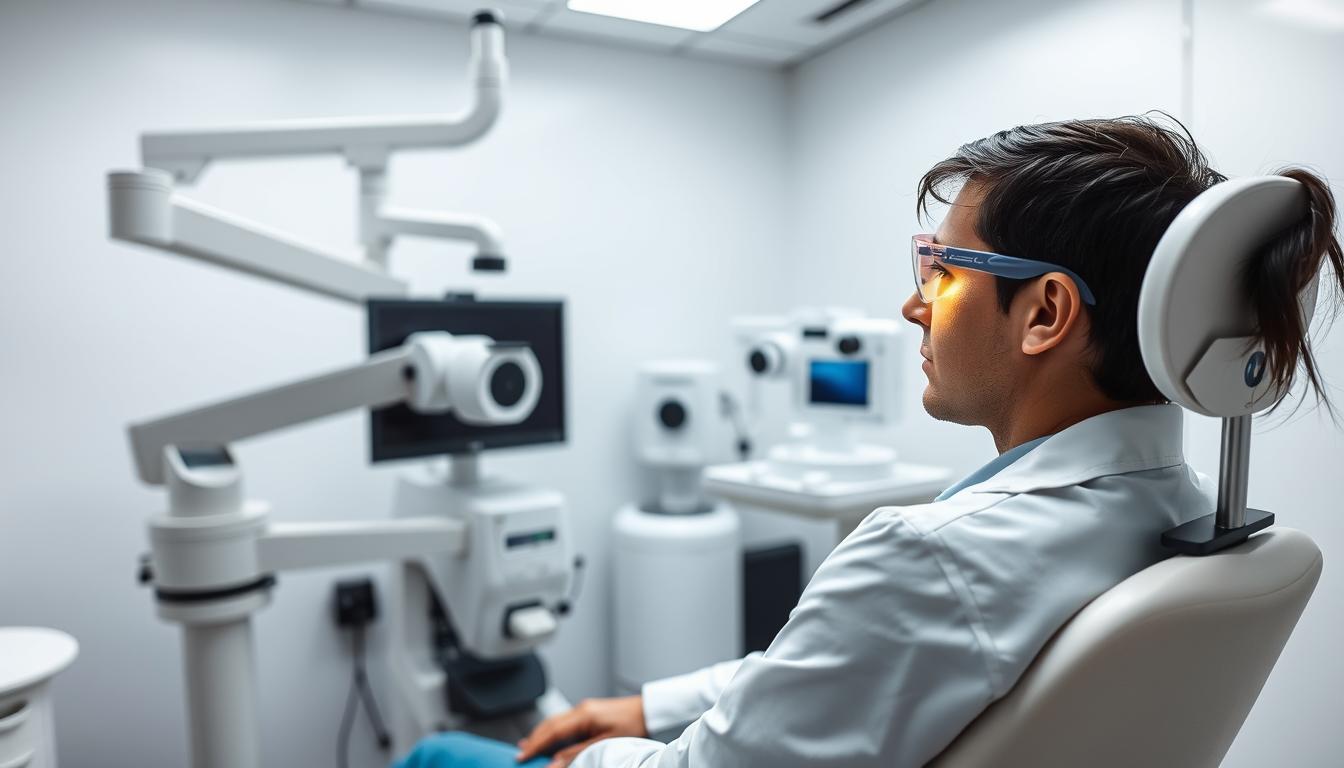
For individuals considering laser eye surgery, understanding the procedure and recovery process is crucial. The laser eye surgery procedure is remarkably quick, typically taking only 15-30 minutes for both eyes, with the actual laser treatment lasting just seconds per eye.
What to Expect During the Procedure
Before the procedure, numbing eye drops are applied to ensure comfort. During LASIK surgery, a thin flap is created in the cornea, which is folded back to allow the laser to reshape the underlying tissue before the flap is repositioned. The SMILE procedure is even less invasive, using a laser to create a small disc of tissue within the cornea, which is then removed through a tiny incision.
Recovery Timeline and Aftercare
Most patients notice improved vision immediately after surgery, though some blurriness is normal during the initial healing period. Recovery timelines vary by procedure type—LASIK patients typically experience good vision within 24-48 hours, while SMILE patients often recover even faster. To ensure a smooth recovery, patients should avoid rubbing their eyes, swimming, and wearing eye makeup for the recommended period. For detailed information about the procedure and recovery expectations, we recommend scheduling a consultation with our specialists by contacting us.
Conclusion: Is Laser Eye Surgery Right for You?
For many, laser eye surgery is a life-changing procedure that offers a permanent alternative to glasses and contact lenses. The vast majority of people who undergo this surgery experience improved vision and a significant reduction in their dependence on corrective eyewear.
While laser eye surgery is effective for treating myopia, hyperopia, and astigmatism, it’s essential to understand that natural age-related changes may still occur. To determine your suitability for laser eye surgery and discuss your specific vision needs, we recommend booking a comprehensive consultation. Our team is committed to providing honest, transparent information to help you make an informed decision about your vision correction options. To learn more or discuss pricing, please contact us to arrange a consultation.
FAQ
What is the typical lifespan of the results from laser vision correction?
The results from laser vision correction can last for many years, and in most cases, the correction is permanent. However, age-related vision changes can still occur.
Will I still need reading glasses after undergoing laser vision correction?
As we age, presbyopia can develop, making it difficult to focus on close objects. While laser vision correction can correct distance vision, it may not eliminate the need for reading glasses.
Can laser vision correction treat astigmatism?
Yes, laser vision correction can effectively treat astigmatism by reshaping the cornea to improve the way the eye focuses light.
How does LASIK differ from other types of laser vision correction procedures?
LASIK is a popular type of laser vision correction that involves creating a thin flap in the cornea to reshape the underlying tissue. Other procedures, such as SMILE, use different techniques to achieve similar results.
Are there any risks or complications associated with laser vision correction?
As with any surgical procedure, there are risks and potential complications associated with laser vision correction, including dry eye and infection. However, these risks are relatively low, and most patients experience a smooth recovery.
Can I undergo laser vision correction if I have a cataract?
If you have a cataract, you may need to undergo cataract surgery before having laser vision correction. In some cases, laser vision correction can be performed at the same time as cataract surgery.
How long does it take to recover from laser vision correction?
The recovery time for laser vision correction is typically relatively short, with most patients experiencing improved vision within a few days. However, it may take several weeks for the cornea to fully heal.


